
BLOOD FLOW
The Complete Guide to Nitric Oxide for Athletes
Nitric oxide determines blood flow to working muscle during every training session and recovery window. This guide covers how the pathway works, what 50+ clinical trials show, and what a clinical dose actually looks like on a label.

What Is Nitric Oxide and Why Does It Matter for Athletic Performance?
Nitric oxide is a signaling molecule produced in the lining of blood vessels. When it releases, it causes smooth muscle cells in the vessel walls to relax, widening the vessel and increasing the volume of blood that flows through it. For athletes, the result is more oxygen and nutrients delivered to working muscle during exercise, and faster clearance of metabolic waste during recovery.
Every training variable that depends on blood flow responds to nitric oxide levels: endurance, strength output, muscular pump, and recovery speed between sessions. The mechanism is well-established across decades of cardiovascular and sports science research. What has changed is the quality of ingredients available to drive it reliably, at the doses that appear in the published trials.
Why Standard Nitric Oxide Ingredients Fall Short
L-Arginine is the amino acid the body uses to produce nitric oxide. Supplementing it directly seems straightforward. The problem is well-documented: standard oral L-Arginine is largely broken down in the gut and liver before it reaches systemic circulation. What survives that first-pass metabolism is often insufficient to meaningfully shift nitric oxide levels. This is why published research on standard oral L-Arginine shows inconsistent results across independent trials.
The pathway is correct. The delivery is the failure point. Effective nitric oxide supplementation requires getting usable arginine into the bloodstream, not just consuming it. There are two ways to do this that the clinical evidence consistently supports, and they work through different mechanisms in the same pathway.
What Is Nitrosigine and How Does It Work?
Nitrosigine® is a patented ingredient, inositol-stabilized arginine silicate, developed specifically to overcome the bioavailability limitations of standard L-Arginine. The bonded structure protects arginine through the digestive process and delivers it to systemic circulation intact, where it converts to nitric oxide in the vascular endothelium.
The research base on Nitrosigine® is the most extensive of any nitric oxide ingredient available in RTD format. More than 50 published human clinical trials document its effects on blood flow, endurance, and cognitive performance. Across independent studies, the results are consistent at the 1,500mg dose: a 31% increase in blood flow to working muscle within 30 minutes, with effects sustained for up to 6 hours after a single serving.
The 31% blood flow figure is not a projection. It comes from peer-reviewed research measuring vasodilation directly. For athletes timing pre-session nutrition, the 30-minute onset window matters. For recovery, the 6-hour duration means the physiological effect extends well beyond the training session itself.
For a complete breakdown of Nitrosigine's mechanism, clinical evidence, and how it compares to standard L-Arginine, see the Nitrosigine® ingredient page. For a deeper look at how Nitrosigine and nitric oxide affect blood flow specifically, see What is Nitrosigine and why does it matter for athletes.
What Is L-Citrulline and How Does It Feed the Nitric Oxide Pathway?
L-Citrulline takes a different route to the same outcome. Rather than providing arginine directly, it bypasses the digestive tract entirely, travels to the kidneys, and converts to arginine there through the urea cycle. This kidney-conversion pathway delivers a sustained arginine supply to systemic circulation without the first-pass degradation that limits standard L-Arginine.
Published pharmacokinetic research consistently shows L-Citrulline producing higher plasma arginine levels than equivalent oral doses of L-Arginine itself. The upstream mechanism means it is not competing with Nitrosigine® for the same receptor site. It is replenishing the arginine pool continuously while Nitrosigine® drives direct nitric oxide output at the endothelial level. Two separate entry points in the same production pathway, running simultaneously.
For the full mechanism breakdown and clinical evidence on L-Citrulline, see the L-Citrulline ingredient page. For a detailed comparison of how L-Citrulline and Nitrosigine® complement each other, see L-Citrulline and Nitrosigine: how they work together.
Why a Dual Nitric Oxide System Outperforms a Single Ingredient
Most functional beverages use one nitric oxide ingredient. A single-ingredient approach activates the pathway from one entry point, at one dose, producing one level of output. The typical choices are L-Citrulline, a standard arginine compound, or a branded arginine form, included at whatever dose the margin allows.
NutraLife uses both Nitrosigine® and L-Citrulline simultaneously. Nitrosigine® drives nitric oxide synthesis through direct arginine delivery to the endothelium. L-Citrulline replenishes the arginine pool from upstream through the renal conversion pathway. Two entry points, two dose contributions, running at the same time.
Published research on the combined ingredient approach shows the output exceeds what either ingredient produces alone. This is not a theoretical claim. It is the reason the NutraLife formula uses both at full clinical doses rather than one at a partial dose to fit a cost target. The complete formula, with every ingredient and every dose disclosed, is on The NutraLife Formula page.
For a detailed look at how blood flow improvements from this dual system translate to endurance and recovery, see How blood flow affects endurance and recovery.
How Quickly Does a Nitric Oxide Supplement Start Working?
Nitrosigine® begins increasing nitric oxide and blood arginine levels within 30 minutes of a single dose, based on published clinical research. L-Citrulline's kidney-conversion pathway creates a broader, more sustained arginine release that complements the faster-acting mechanism. The two together produce rapid onset followed by a sustained window, not a single peak and drop.
For athletes timing their pre-session protocol, this means consuming NutraLife 30 minutes before training puts Nitrosigine® at peak activity during the session itself. The L-Citrulline contribution continues through the session and into recovery. The combined effect covers the full physiological demand cycle from warm-up through post-training nutrient delivery.
What Should I Look for on a Nitric Oxide Drink Label?
Not all nitric oxide drinks deliver the doses studied in clinical research. The label is the only tool that tells you what you are actually buying. Three things matter:
Ingredient specificity. Nitrosigine® is a patented, branded form of inositol-stabilized arginine silicate. Standard L-Arginine or unbranded arginine compounds have a different bioavailability profile and a different evidence base. Generic "arginine" on a label is not the same as Nitrosigine® at 1,500mg.
Dose disclosure. The clinical research on Nitrosigine® is conducted at 1,500mg. L-Citrulline research uses 1,000mg or above. Citrulline malate is a diluted compound where L-Citrulline content is lower than the listed number. If doses appear inside a proprietary blend without individual numbers, the formula cannot be assessed against the research. A fully disclosed formula puts every number next to every ingredient name. You can verify it against the published science yourself.
Number of nitric oxide ingredients. A formula using one nitric oxide ingredient at a partial dose is a different product from a formula using two complementary ingredients at full clinical doses. The label tells you which one you have.
For a broader guide to evaluating supplement and functional beverage labels, see Best nitric oxide drinks in 2026: what the label should say.
Daily Use vs. Pre-Workout: What the Research Actually Supports
A common assumption is that nitric oxide supplements belong only in the pre-workout window. The research does not limit it there. Blood flow supports recovery, nutrient delivery to tissue, and baseline cardiovascular function continuously, not only during exercise. Consistent nitric oxide levels across the day compound the benefit over time, which is why the clinical protocols on Nitrosigine® include sustained daily use, not single-dose testing.
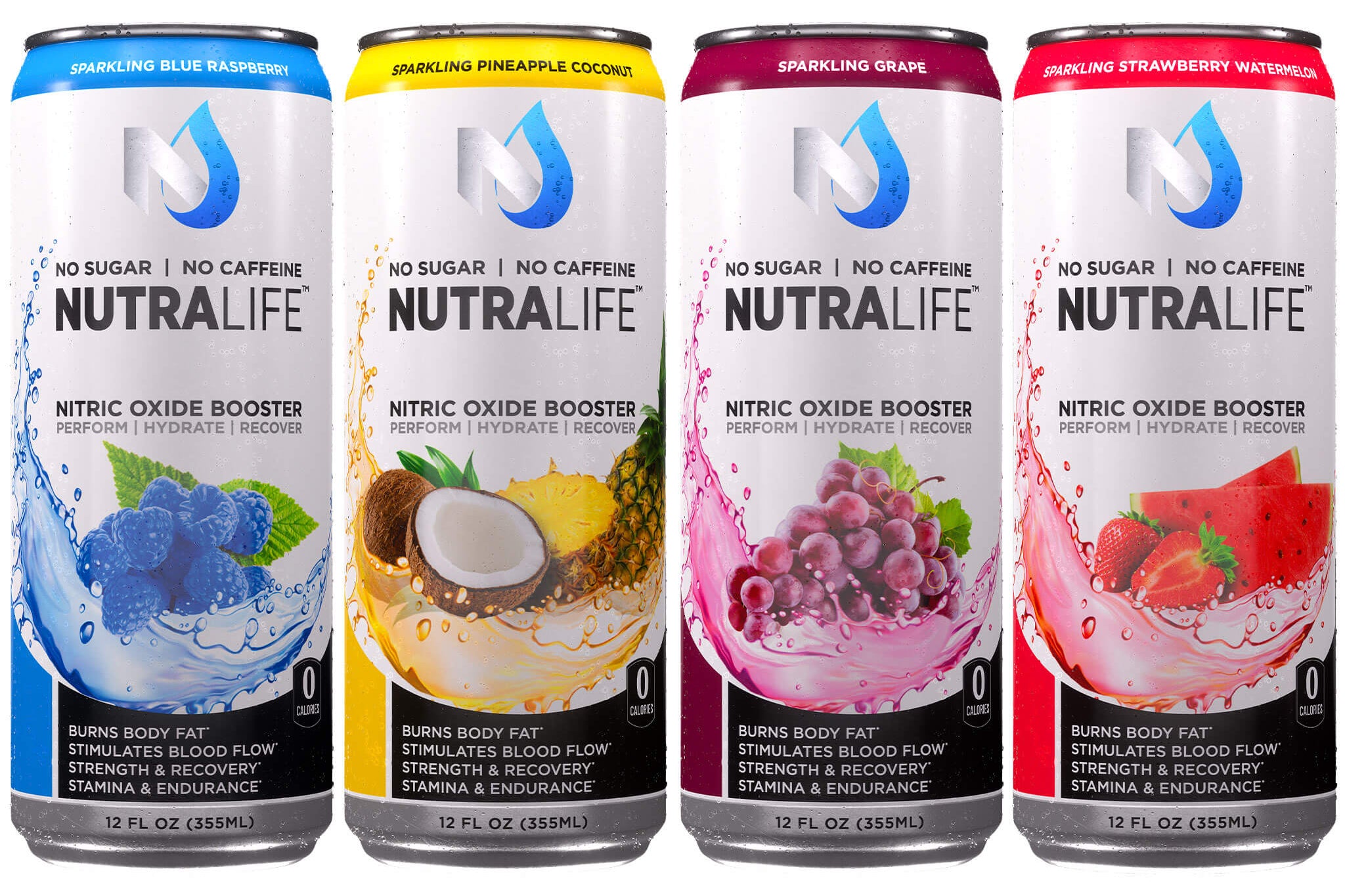
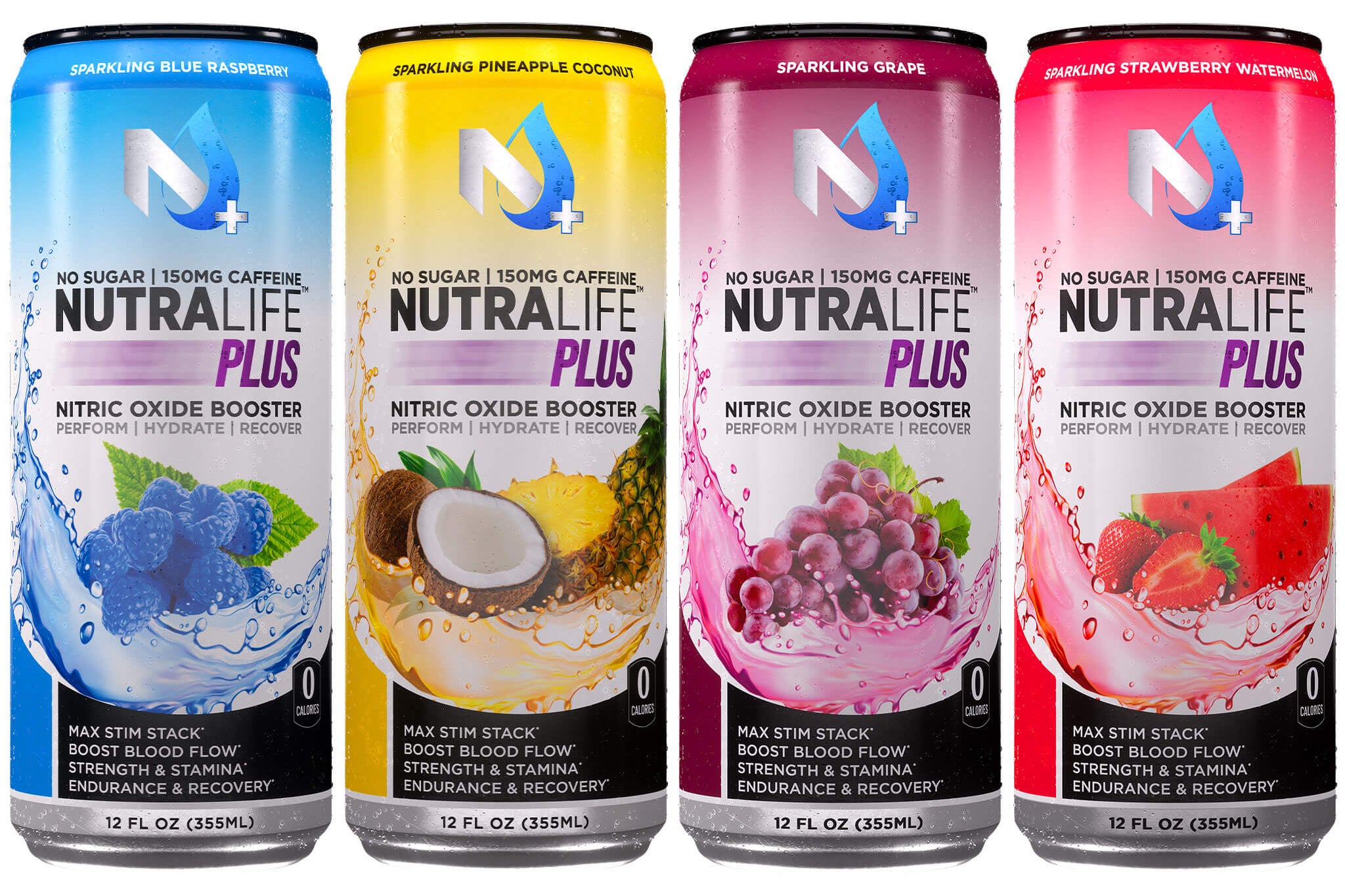
NutraLife is designed for two servings daily. NutraLife is the caffeine-free formula, appropriate at any time of day, including morning, afternoon, or evening without affecting sleep. NutraLife Plus adds 60mg Dynamine® and 150mg caffeine for training days and high-output sessions. The nitric oxide system is identical in both products. The stimulant layer is the only difference between them.
At two servings daily, the formula operates as a consistent performance system rather than a single pre-workout dose. Daily compliance is what produces compounding results over time, and the RTD format is specifically designed to make that compliance straightforward.
KEY TAKEAWAYS
Got Questions
Frequently Asked Questions
What is nitric oxide and what does it do for athletic performance?
What is the difference between Nitrosigine and L-Citrulline as nitric oxide ingredients?
How quickly does a nitric oxide supplement start working?
How do I know if a nitric oxide drink is clinically dosed?
Can I use a nitric oxide supplement every day?
What should I look for on the label of a nitric oxide drink?
Is a ready-to-drink format as effective as a powder for nitric oxide supplementation?
REFERENCES
NutraLife ingredient claims are supported by peer-reviewed published research. The following studies were referenced in the development of this page.
2. Rood-Ojalvo S, Sandler D, Veledar E, Komorowski J. The benefits of inositol-stabilized arginine silicate as a workout ingredient. Journal of the International Society of Sports Nutrition. 2015;12(Suppl 1):P14.
3. Komorowski J, Ojalvo SP. A pharmacokinetic evaluation of the duration of effect of inositol-stabilized arginine silicate and inositol alone. FASEB Journal. 2019;33(1_supplement).
4. Schwedhelm E, Maas R, Freese R, et al. Pharmacokinetic and pharmacodynamic properties of oral L-citrulline and L-arginine: impact on nitric oxide metabolism. British Journal of Clinical Pharmacology. 2008;65(1):51-59.
5. Perez-Guisado J, Jakeman PM. Citrulline malate enhances athletic anaerobic performance and relieves muscle soreness. Journal of Strength and Conditioning Research. 2010;24(5):1215-1222.
6. Figueroa A, Wong A, Jaime SJ, Gonzales JU. Influence of L-citrulline and watermelon supplementation on vascular function and exercise performance. Current Opinion in Clinical Nutrition and Metabolic Care. 2017;20(1):92-98.
7. Proctor SD, Kelly SE, Vine DF, et al. Inositol-stabilized arginine silicate demonstrates dose-dependent improvement in endurance exercise performance in competitive male cyclists. FASEB Journal. 2019.
8. Bloomer RJ, Farney TM. Acute plasma volume and cell-free hemoglobin changes following inositol-stabilized arginine silicate consumption. Nutrients. 2021;13(7):2211.
9. Gonzalez AM, Trexler ET. Effects of citrulline supplementation on exercise performance in humans. Journal of Strength and Conditioning Research. 2020;34(5):1480-1495.
10. Moinard C, Nicolis I, Neveux N, et al. Dose-ranging effects of citrulline administration on plasma amino acids and hormonal patterns in healthy subjects. British Journal of Nutrition. 2008;99(4):855-862.
11. Bailey SJ, Winyard P, Vanhatalo A, et al. Dietary nitrate supplementation reduces the O2 cost of low-intensity exercise and enhances tolerance to high-intensity exercise in humans. Journal of Applied Physiology. 2009;107(4):1144-1155.
12. Alvares TS, Meirelles CM, Bhambhani YN, et al. L-Arginine as a potential ergogenic aid in healthy subjects. Sports Medicine. 2011;41(3):233-248.
*These statements have not been evaluated by the Food and Drug Administration. This product is not intended to diagnose, treat, cure, or prevent any disease.

