
BLOOD FLOW
Best Nitric Oxide Drinks in 2026: What the Label Should Say
Not all nitric oxide drinks deliver what the clinical research supports. This guide walks through the three criteria that separate a clinically effective formula from one that only appears to be on the label.

Reading a nitric oxide drink label is a specific skill with measurable criteria. The questions that separate a clinically effective formula from one that only appears effective on the label are not about brand story or flavor formulation. They are about whether the formula uses the specific ingredients and individual doses that the published clinical research is built on.
What Makes a Nitric Oxide Drink Actually Work?
Nitric oxide drives vasodilation: the widening of blood vessels that increases blood flow volume to working muscle during exercise and through the recovery window. A functional nitric oxide drink must supply the substrates that feed this production pathway in forms and doses the body can actually use.
Two ingredients have the strongest evidence base in the published clinical research at doses practical for RTD formulation: Nitrosigine® (inositol-stabilized arginine silicate) at 1,500mg and L-Citrulline at 1,000mg. Both increase plasma arginine availability through different mechanisms. Both have been studied in multiple independent human trials showing measurable blood flow increases at the doses stated. Both have a bioavailability profile that makes them functional in a daily-use beverage format.
What does not work as reliably: standard L-Arginine. Published pharmacokinetic research consistently shows standard oral L-Arginine degrading substantially in the gut and liver before reaching systemic circulation. The mechanism is correct. The delivery is the failure point. This distinction is invisible on a label unless you know what to look for.
The Ingredient Specificity Test
The first thing to check on any nitric oxide drink label is whether the ingredients listed are the specific compounds studied in clinical research, not generic or unbranded versions of the same amino acid family.
Nitrosigine® is a patented, trademarked ingredient. The registered trademark symbol should appear on the label next to the name. If a label lists "arginine silicate," "arginine inositol," or simply "L-Arginine," that is a different compound. It may share chemical ancestry with Nitrosigine® but it does not have the same bioavailability profile, the same molecular stability, or the same body of published clinical evidence.
L-Citrulline similarly should be listed by its full name. Citrulline malate is a different compound: a salt form where L-Citrulline is bonded to malic acid. The malic acid dilutes the effective L-Citrulline content, meaning a label that lists "Citrulline Malate 1,000mg" is not delivering 1,000mg of L-Citrulline. This distinction matters when assessing whether a formula hits the doses studied in published research.
The Dose Transparency Test
The second test is whether individual ingredient doses appear on the label separately, or whether ingredients are grouped inside a proprietary blend with only a total blend weight listed.
A proprietary blend groups multiple ingredients under one collective name and lists only the total weight of that group. Individual ingredient amounts are not disclosed. A formula might list 2,000mg of a "nitric oxide blend" containing five ingredients, but without individual dose numbers, there is no way to know whether any single ingredient is present at a meaningful amount or at trace levels that serve no functional purpose.
A fully disclosed formula lists every ingredient with its individual dose next to it. This is the only way to verify that Nitrosigine® is at 1,500mg, that L-Citrulline is at 1,000mg, and that neither has been included at a token amount to justify listing the name. The label is the accountability document. A fully disclosed formula is one that can be checked against the published research on its own ingredients.
Single vs. Dual Nitric Oxide Pathway Formulas
The third criterion is how many separate mechanisms the formula uses to drive nitric oxide production. Most RTD beverages that include nitric oxide ingredients use one. The cost and formulation complexity of including two complementary ingredients at full clinical doses is higher, which is why single-ingredient approaches are more common.
The functional difference: a single-ingredient formula activates the nitric oxide pathway from one entry point. A dual-pathway formula activates it from two separate entry points simultaneously. Nitrosigine® delivers arginine directly to the vascular endothelium where nitric oxide synthesis occurs. L-Citrulline converts to arginine in the kidneys through the urea cycle, replenishing the arginine pool from upstream continuously.
Published research on the combined approach shows nitric oxide output that exceeds what either ingredient produces in isolation. This is not a theoretical claim based on mechanism. It is an outcome documented in peer-reviewed clinical research comparing combined and single-ingredient protocols. For a detailed explanation of how the two mechanisms work together, see L-Citrulline and Nitrosigine: how they work together.
Reading the Label Step by Step
Apply these three tests in order to any nitric oxide drink label.
Step 1: Identify the nitric oxide ingredients. Find Nitrosigine® and L-Citrulline by those exact names and trademarks. Note any ingredient that uses generic names instead of the branded compound.
Step 2: Check individual dose numbers. Look for Nitrosigine® at 1,500mg and L-Citrulline at 1,000mg listed individually. If doses appear inside a proprietary blend total, the formula cannot be verified against the published research.
Step 3: Count the pathways. Identify whether the formula uses one nitric oxide mechanism or two. If only one ingredient drives nitric oxide, the formula is not operating a dual-pathway system regardless of what the marketing language describes.
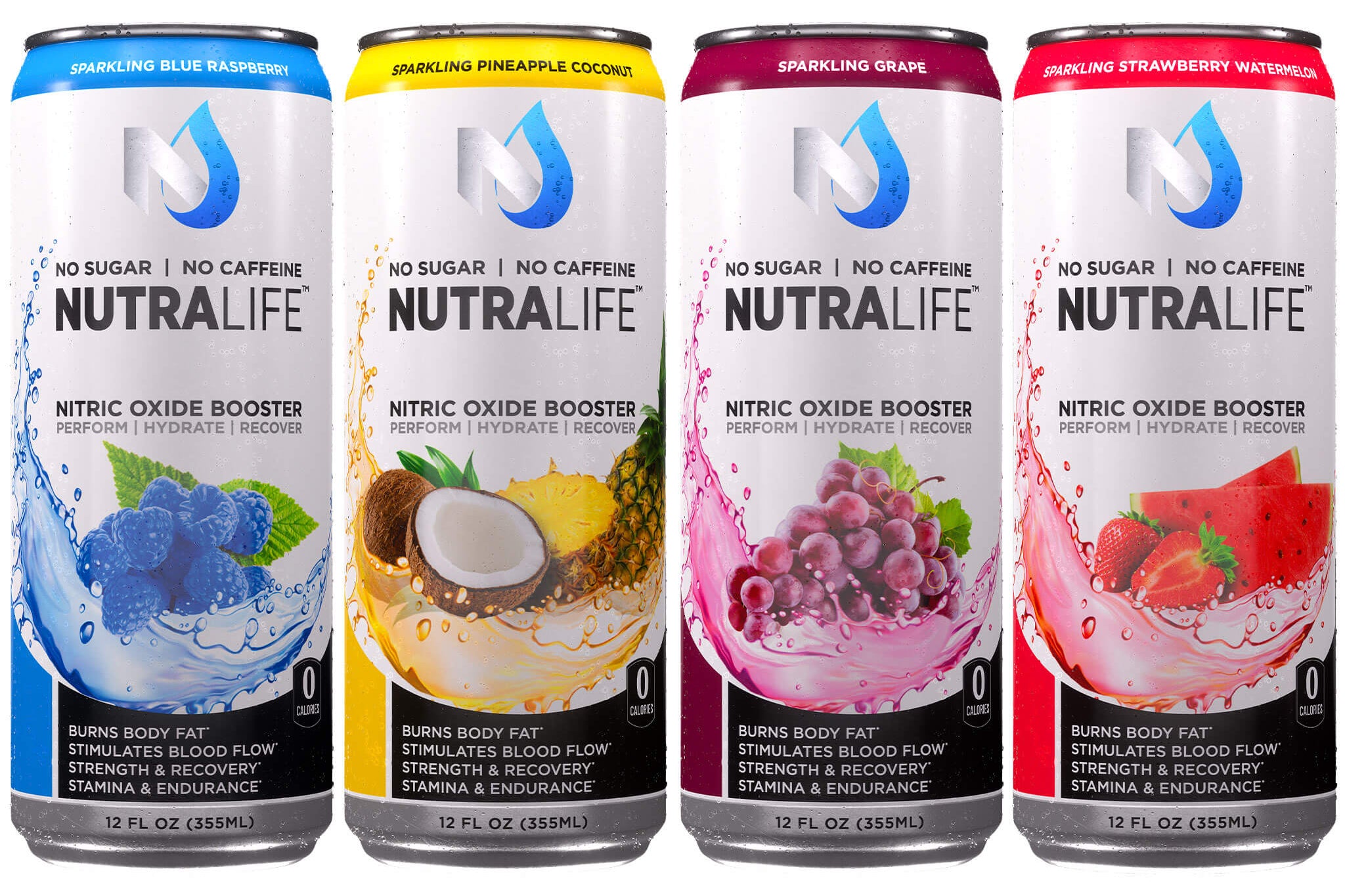
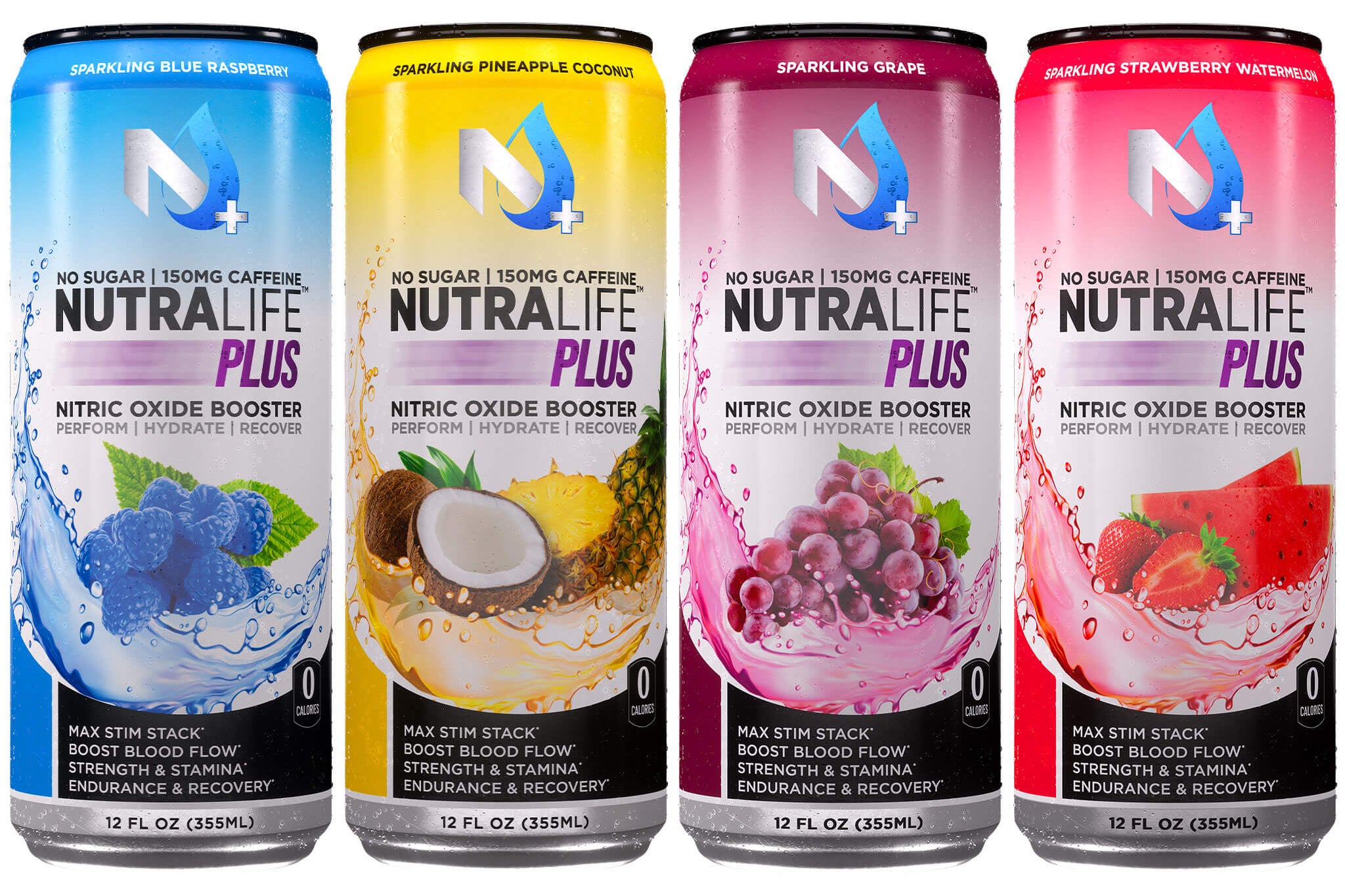
The NutraLife formula discloses every ingredient by name and individual dose. Nitrosigine® at 1,500mg. L-Citrulline at 1,000mg. Both listed separately in the fully disclosed formula. The complete ingredient breakdown is on The NutraLife Formula page. For the full guide to how nitric oxide ingredients work in an RTD context, see The Complete Guide to Nitric Oxide for Athletes.
KEY TAKEAWAYS
Got Questions
Frequently Asked Questions
What ingredients should I look for in a nitric oxide drink?
What does clinically dosed mean on a supplement label?
What is the difference between a proprietary blend and a fully disclosed formula?
REFERENCES
NutraLife ingredient claims are supported by peer-reviewed published research. The following studies were referenced in the development of this page.
2. Rood-Ojalvo S, Sandler D, Veledar E, Komorowski J. The benefits of inositol-stabilized arginine silicate as a workout ingredient. Journal of the International Society of Sports Nutrition. 2015;12(Suppl 1):P14.
3. Komorowski J, Ojalvo SP. A pharmacokinetic evaluation of the duration of effect of inositol-stabilized arginine silicate and inositol alone. FASEB Journal. 2019;33(1_supplement).
4. Schwedhelm E, Maas R, Freese R, et al. Pharmacokinetic and pharmacodynamic properties of oral L-citrulline and L-arginine: impact on nitric oxide metabolism. British Journal of Clinical Pharmacology. 2008;65(1):51-59.
5. Alvares TS, Meirelles CM, Bhambhani YN, et al. L-Arginine as a potential ergogenic aid in healthy subjects. Sports Medicine. 2011;41(3):233-248.
6. Perez-Guisado J, Jakeman PM. Citrulline malate enhances athletic anaerobic performance and relieves muscle soreness. Journal of Strength and Conditioning Research. 2010;24(5):1215-1222.
7. Gonzalez AM, Trexler ET. Effects of citrulline supplementation on exercise performance in humans. Journal of Strength and Conditioning Research. 2020;34(5):1480-1495.
8. Proctor SD, Kelly SE, Vine DF, et al. Inositol-stabilized arginine silicate demonstrates dose-dependent improvement in endurance exercise performance in competitive male cyclists. FASEB Journal. 2019.
9. Bailey SJ, Winyard P, Vanhatalo A, et al. Dietary nitrate supplementation reduces the O2 cost of low-intensity exercise and enhances tolerance to high-intensity exercise in humans. Journal of Applied Physiology. 2009;107(4):1144-1155.
10. Moinard C, Nicolis I, Neveux N, et al. Dose-ranging effects of citrulline administration on plasma amino acids and hormonal patterns in healthy subjects. British Journal of Nutrition. 2008;99(4):855-862.
*These statements have not been evaluated by the Food and Drug Administration. This product is not intended to diagnose, treat, cure, or prevent any disease.

