
LABEL TRANSPARENCY
The Supplement Label Guide
Not all supplement labels disclose what matters. This guide covers what clinically dosed means, what proprietary blends hide, and how to verify every ingredient in a functional beverage against the published research.

What Is a Supplement Label and What Does It Tell You?
A supplement or functional beverage label is the only independent source of information about what you are buying. It lists ingredients and, if the formula is fully disclosed, the dose of each ingredient per serving. Those two pieces of information, the ingredient name and the dose, are what connect any product to the published clinical research.
The research on any performance ingredient is conducted at a specific dose. Nitrosigine® is studied at 1,500mg. KSM-66® Ashwagandha reaches its documented clinical outcomes at 300mg daily across a two-serving protocol. L-Citrulline is effective at 1,000mg and above. Without the dose on the label, there is no way to know whether a product delivers enough of any ingredient to produce the outcomes documented in the research. For a broader look at what defines this product category, see What Is an RTD Functional Beverage and Why Does It Matter?
What Is a Proprietary Blend and Why Does It Matter?
A proprietary blend groups ingredients together under a single name and discloses only the combined weight of the blend, not the individual doses. A label might read "Performance Complex 2,500mg" followed by a list of ingredient names. You know the total weight. You do not know how much of each ingredient is present.
This matters because of how supplement economics work. When individual doses are hidden inside a blend, a formula can include a minimal, non-functional amount of a clinically researched ingredient alongside cheaper compounds at much higher amounts. The label shows the name of the ingredient with a strong research record. The dose is too low to produce its documented effects. Without individual dose numbers, the buyer cannot tell the difference.
The stated justification for proprietary blends is competitive protection. The practical result is that buyers cannot verify whether any ingredient in the blend is present at a functional amount. A fully disclosed formula removes that uncertainty by design.
What Does Clinically Dosed Actually Mean?
Clinically dosed means an ingredient is present at or above the dose used in published peer-reviewed clinical trials for that specific ingredient. It is not a regulatory term. No governing body defines or enforces it on a label. A brand can print "clinically dosed" without disclosing individual doses, making the claim completely unverifiable.
The only way to confirm a product is clinically dosed is a fully disclosed formula: every ingredient listed with its own dose in milligrams, separately, on the label. Then you can check each number against the published research independently. For a direct breakdown of what separates these two formula types, see Proprietary Blends vs. Clinical Doses: What You Are Actually Buying.
For the six ingredients in NutraLife, every dose is disclosed. The complete breakdown and the research behind each dose is on The NutraLife Formula page.
Why Branded Ingredients Are Not Interchangeable with Generic Forms
Many performance ingredients exist in both patented branded forms and cheaper generic versions. The research does not treat them as equivalent.
Nitrosigine® vs. L-Arginine. Nitrosigine® is inositol-stabilized arginine silicate, a patented compound developed specifically to overcome the bioavailability limitations of standard oral L-Arginine. Standard L-Arginine is largely degraded in the gut and liver before reaching systemic circulation, which is why studies on oral L-Arginine show inconsistent results. More than 50 published human clinical trials document Nitrosigine®'s effects on blood flow and performance. A label listing "L-Arginine" is not referencing those 50+ trials. A label listing "Nitrosigine® 1,500mg" is. See the Nitrosigine® ingredient page.
KSM-66® Ashwagandha vs. generic ashwagandha. KSM-66® is a root-only ashwagandha extract standardized to 5% withanolides, with its own independent clinical research record. Generic ashwagandha varies in extract concentration, plant part sourced, and active compound content. A label listing "ashwagandha 300mg" without specifying KSM-66® cannot be verified against the KSM-66® research. See the KSM-66® Ashwagandha ingredient page.
The same principle applies to Dynamine® vs. generic methylliberine. The brand name on a label is the reference to a specific clinical research record. The generic form has a different evidence base, or no evidence base at the dose listed.
How to Read a Functional Beverage Label: Four Checks
Check 1: Are doses disclosed individually?
Scan for milligram amounts next to each ingredient name. If ingredients appear under a blend name with only a combined weight, individual doses are hidden. If every ingredient shows its own number, the formula is disclosed. Start here before evaluating anything else.
Check 2: Are the doses at the research threshold?
Cross-reference each ingredient against the published dose for that specific form. For nitric oxide support, see the Nitrosigine® and L-Citrulline ingredient pages. For recovery and cortisol response, see KSM-66® Ashwagandha. For clean energy, see Dynamine® and Caffeine. A dose below the research threshold means the formula is not operating at the level the studies were conducted at, regardless of what the label claims.
Check 3: Are the ingredients branded or generic?
Registered trademarks (®) next to ingredient names indicate a patented, clinically studied form with its own research record. Generic forms of the same compound do not carry that record. Nitrosigine®, KSM-66®, and Dynamine® all have independent clinical research tied to their specific patented forms and doses.
Check 4: Are electrolytes individually dosed?
Hydration claims require disclosed electrolyte doses to be verifiable. A label listing "Electrolyte Blend" with a combined weight tells you nothing about the mineral balance. NutraLife discloses every mineral in its Electrolyte Complex individually. See the Electrolyte Complex ingredient page for the full breakdown.
What a Fully Disclosed Formula Looks Like in Practice
NutraLife runs a fully disclosed formula. Every ingredient is named, and every dose is numbered on the label. Six ingredients, six doses, all disclosed. The formula was built to be verifiable against the published research because undisclosed doses cannot be verified at all.
For athletes who evaluate what they consume against peer-reviewed data, the label is the starting point. It tells you what is in the can. The ingredient pages, linked from The NutraLife Formula, connect each dose to its specific research record.
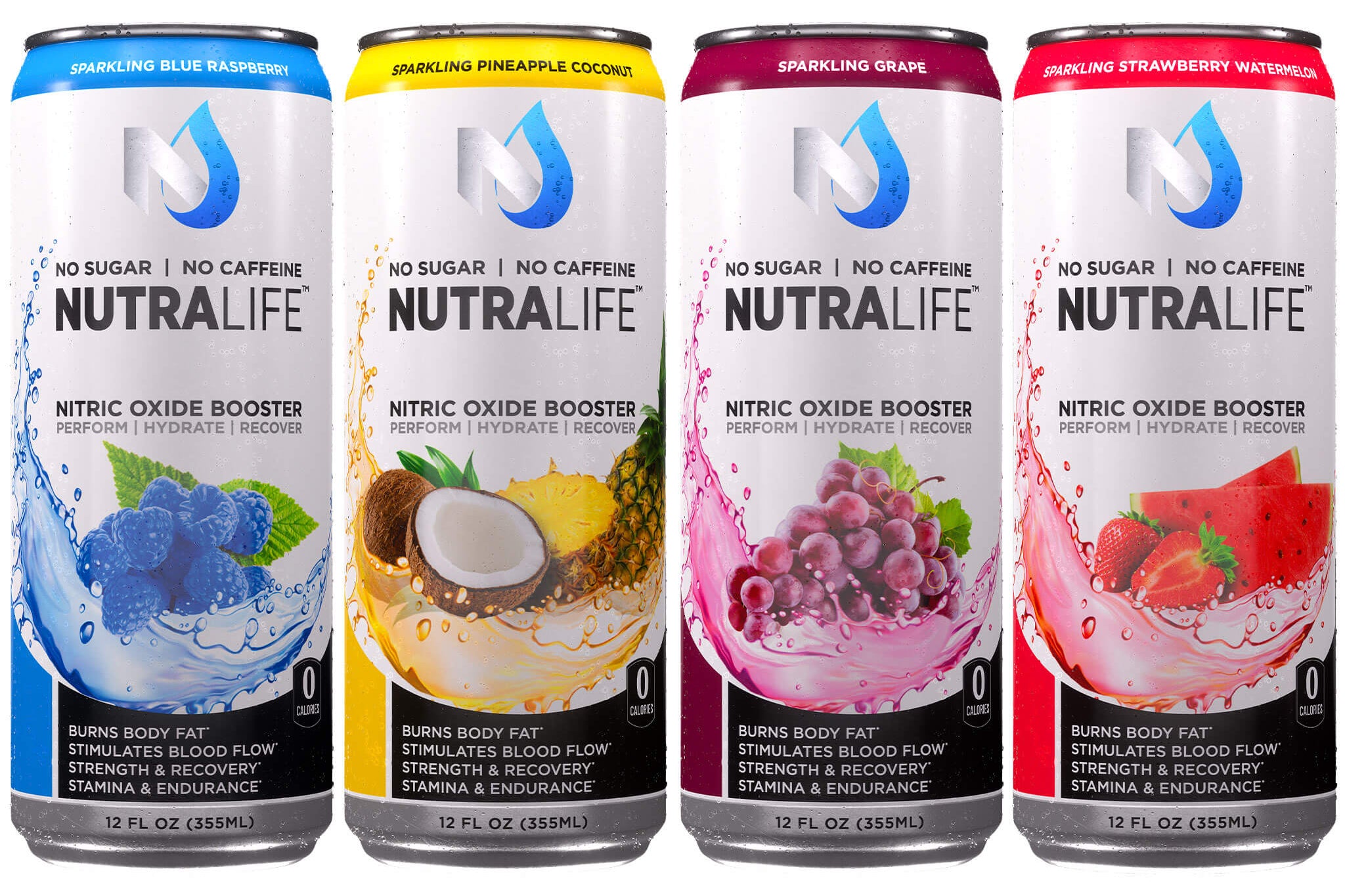
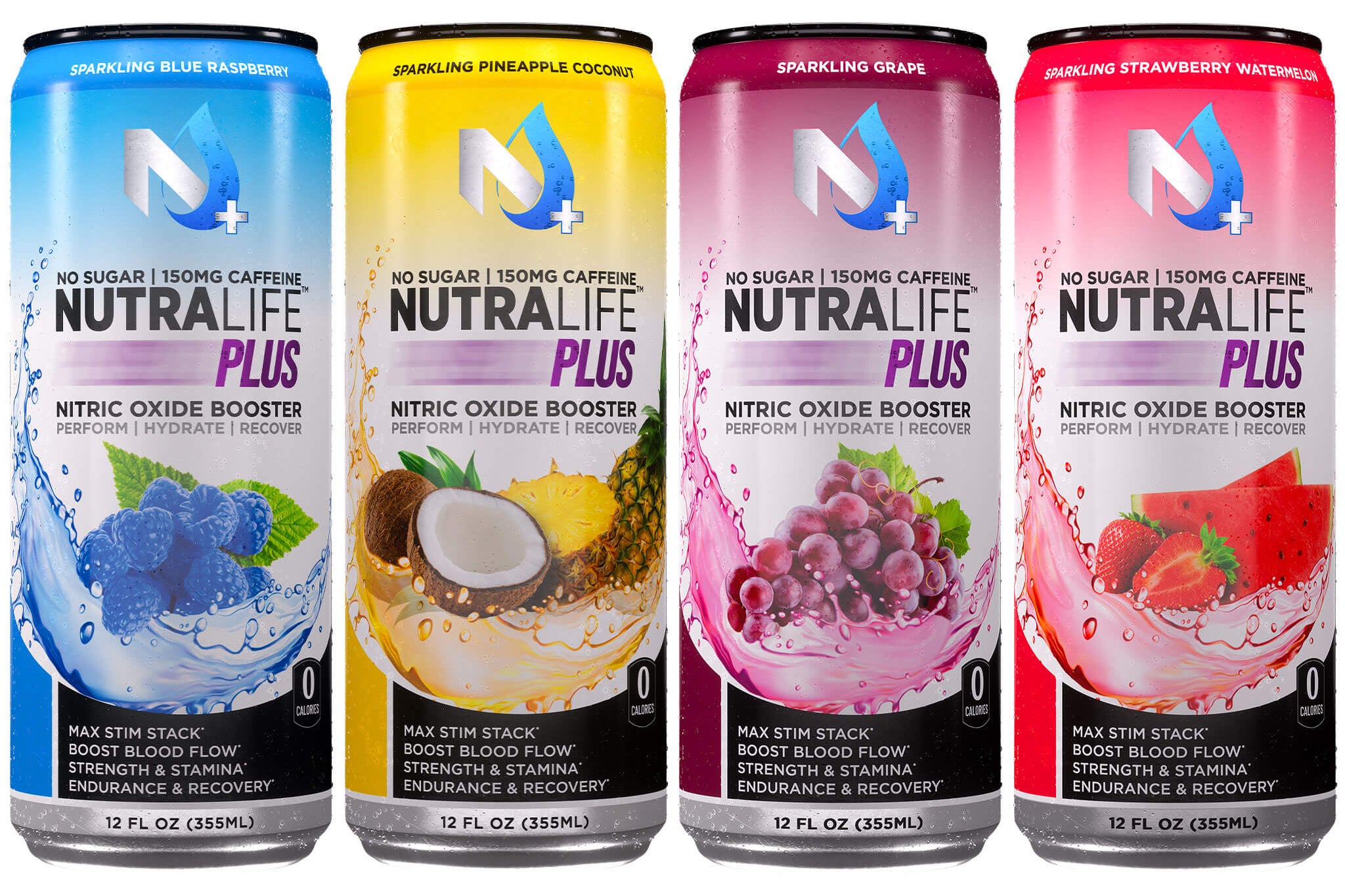
NutraLife and NutraLife Plus share the same core six-ingredient formula. The label on both shows the same ingredients at the same doses. NutraLife Plus adds 60mg Dynamine® and 150mg caffeine for training days. The base formula is identical.
For a deeper look at how the nitric oxide ingredients in NutraLife work at the mechanistic level, see The Complete Guide to Nitric Oxide for Athletes.
KEY TAKEAWAYS
Got Questions
Frequently Asked Questions
What is a proprietary blend and why does it matter?
What does clinically dosed mean in a supplement or functional beverage?
What is the difference between a branded ingredient and a generic ingredient?
What does fully disclosed formula mean?
How can I verify the doses in a functional beverage against the research?
What is a ready-to-drink functional beverage?
Why do some supplement brands use proprietary blends?
REFERENCES
NutraLife ingredient claims are supported by peer-reviewed published research. The following studies were referenced in the development of this page.
2. Rood-Ojalvo S, Sandler D, Veledar E, Komorowski J. The benefits of inositol-stabilized arginine silicate as a workout ingredient. Journal of the International Society of Sports Nutrition. 2015;12(Suppl 1):P14.
3. Wankhede S, Langade D, Joshi K, et al. Examining the effect of Withania somnifera supplementation on muscle strength and recovery. Journal of the International Society of Sports Nutrition. 2015;12:43.
4. Choudhary D, Bhattacharyya S, Bose S. Efficacy and safety of ashwagandha root extract in improving memory and cognitive functions. Journal of Dietary Supplements. 2017;14(6):599-612.
5. Schwedhelm E, Maas R, Freese R, et al. Pharmacokinetic and pharmacodynamic properties of oral L-citrulline and L-arginine: impact on nitric oxide metabolism. British Journal of Clinical Pharmacology. 2008;65(1):51-59.
6. Perez-Guisado J, Jakeman PM. Citrulline malate enhances athletic anaerobic performance and relieves muscle soreness. Journal of Strength and Conditioning Research. 2010;24(5):1215-1222.
7. Komorowski J, Ojalvo SP. A pharmacokinetic evaluation of the duration of effect of inositol-stabilized arginine silicate and inositol alone. FASEB Journal. 2019;33(1_supplement).
8. Gonzalez AM, Trexler ET. Effects of citrulline supplementation on exercise performance in humans. Journal of Strength and Conditioning Research. 2020;34(5):1480-1495.
9. Kerksick CM, Wilborn CD, Roberts MD, et al. ISSN exercise and sports nutrition review update: research and recommendations. Journal of the International Society of Sports Nutrition. 2018;15(1):38.
10. Sandhu JS, Shah B, Shenoy S, et al. Effects of Withania somnifera and Terminalia arjuna on physical performance and cardiorespiratory endurance. International Journal of Ayurveda Research. 2010;1(3):144-149.
11. Bloomer RJ, Farney TM. Acute plasma volume and cell-free hemoglobin changes following inositol-stabilized arginine silicate consumption. Nutrients. 2021;13(7):2211.
12. Moinard C, Nicolis I, Neveux N, et al. Dose-ranging effects of citrulline administration on plasma amino acids and hormonal patterns in healthy subjects. British Journal of Nutrition. 2008;99(4):855-862.
*These statements have not been evaluated by the Food and Drug Administration. This product is not intended to diagnose, treat, cure, or prevent any disease.

