
NUTRALIFE PLUS
The Clean Energy Guide
150mg caffeine paired with Dynamine® works differently than high-dose caffeine stacks. This guide covers how the combination produces sustained energy output without anxiety or crash, and how to evaluate what is actually in a clean energy drink.

What Is Clean Energy and Why Does Dose Define It?
Clean energy is a category claim, not a regulated standard. Any brand can print it on a label regardless of what the formula contains. The only meaningful definition of clean energy is measurable: a caffeine dose calibrated for sustained performance output rather than maximum stimulation, combined with complementary ingredients that extend and smooth the energy curve without adding cardiovascular stress.
Dose is the defining variable. 150mg of caffeine produces a different physiological response than 250mg or 300mg. The difference is not just intensity. High doses push adenosine receptor blockade past the threshold where the rebound effect becomes significant, producing the crash that lower doses avoid. The dose determines whether the label claim is defensible.
Why High-Dose Caffeine Produces the Crash
Caffeine works by blocking adenosine receptors. Adenosine is the molecule that signals fatigue. When adenosine cannot bind to its receptors, fatigue signals are suppressed and alertness increases. This is the mechanism. The dose determines how completely those receptors are blocked and for how long.
At high doses, the receptor blockade is more complete, but the rebound is sharper. When the caffeine metabolizes out of the system, adenosine floods back to now-sensitized receptors, producing fatigue that can be worse than the pre-caffeine baseline. This is the crash. It is dose-dependent, not a property of caffeine itself.
High-dose caffeine also activates the sympathetic nervous system more aggressively, raising heart rate and blood pressure at levels that 150mg does not produce in most trained athletes. For athletes already at elevated physiological baselines during training, unnecessary cardiovascular stress is counterproductive. The clean energy case for 150mg is not marketing positioning. It is pharmacology. See 150mg caffeine: why less is more for sustained performance for the complete dose-response breakdown.
What Is Dynamine and How Does It Work?
Dynamine® (methylliberine) is a purine alkaloid that acts on the same adenosine system as caffeine, but engages it differently. Caffeine blocks adenosine receptors directly, occupying the site so the fatigue signal cannot bind. Compound Solutions, the developer of Dynamine®, describes methylliberine as modulating the sensitivity of those receptors rather than blocking them outright. Dopamine involvement is also proposed, which would account for the reported effects on mood and motivation.
The key functional difference: Dynamine® does not meaningfully raise heart rate or blood pressure at the doses used in functional beverages. A four-week trial in 125 adults, at doses above what NutraLife Plus contains, reported no adverse effect on cardiovascular measures or blood biomarkers. For athletes who need energy output without cardiovascular load, the distinction matters.
Dynamine® is also absorbed faster than caffeine. Compound Solutions reports subjects noting improved energy, mood, and focus at roughly 15 minutes, peaking around 60 minutes. Pairing that faster onset with sustained caffeine metabolism produces an energy curve that starts earlier and lasts longer than caffeine alone. See the Dynamine® ingredient page for the full mechanism and evidence review. For a side-by-side breakdown of exactly how Dynamine® differs from caffeine, see What is Dynamine and how does it work differently than caffeine.
How 150mg Caffeine and Dynamine Work Together in NutraLife Plus
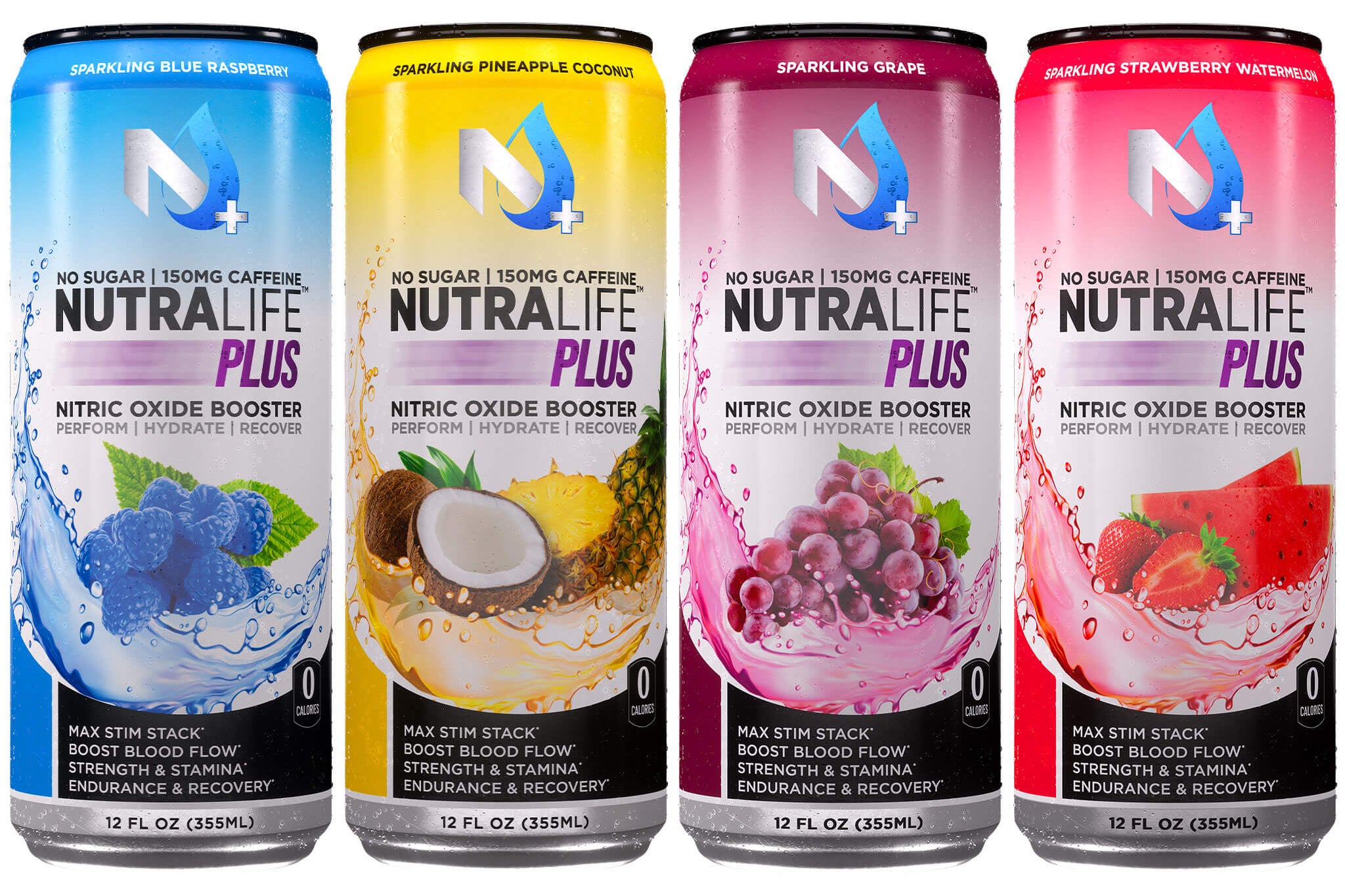
NutraLife Plus uses Dynamine® at 60mg and caffeine at 150mg simultaneously. The two compounds cover different parts of the training window. Dynamine® is absorbed faster and contributes early. Caffeine contributes sustained adenosine blockade. The combined effect extends the energy window and smooths the experience relative to caffeine-only formulas at equivalent or higher doses.
The 150mg caffeine dose is deliberate. It sits above the threshold where performance benefits are consistently documented in published sports nutrition research, and below the threshold where anxiety and cardiovascular effects become significant for most trained athletes. See the Caffeine ingredient page for the dose-specific evidence base.
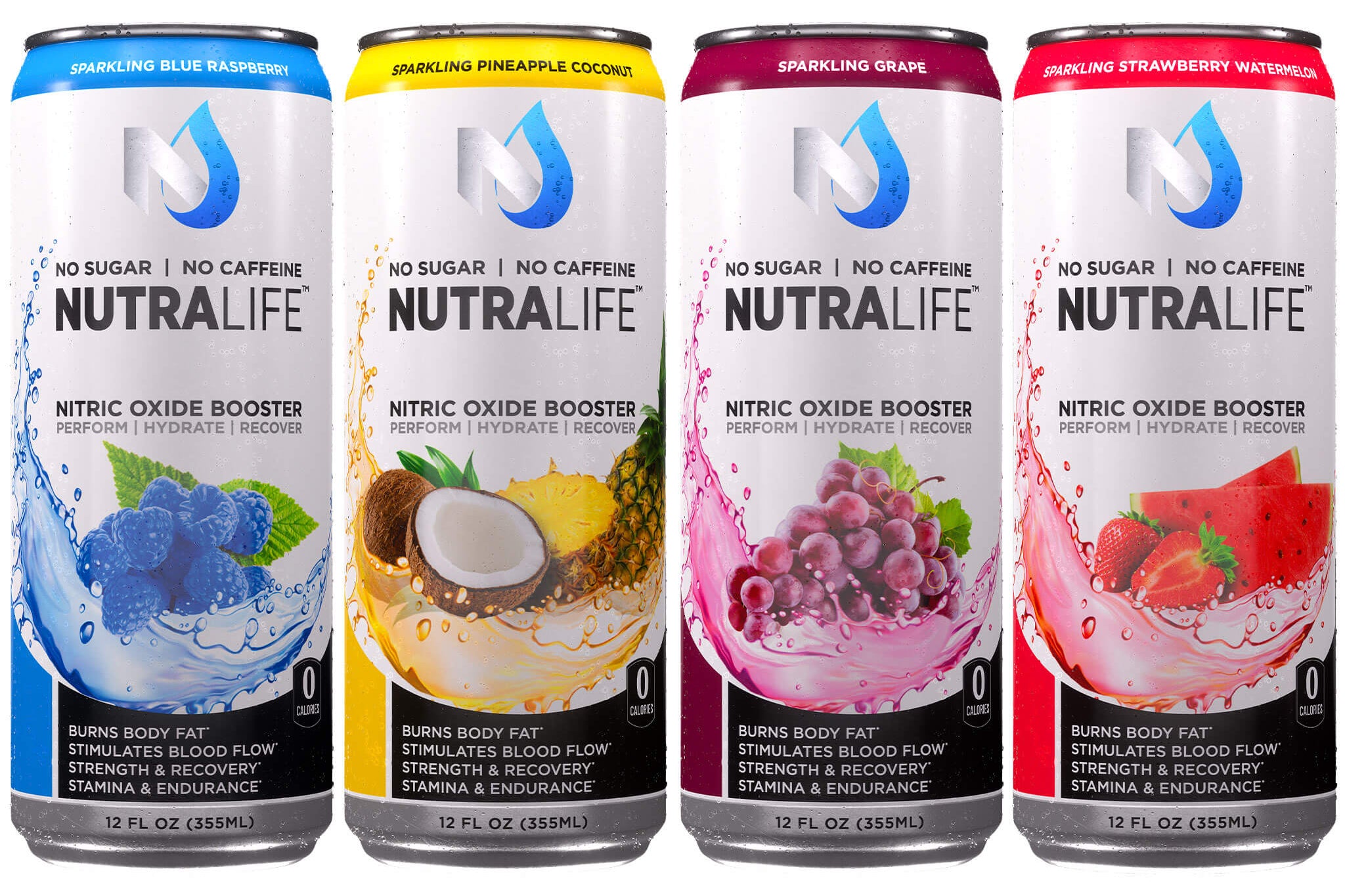
NutraLife Plus is built for training days and high-output sessions. NutraLife covers daily baseline use without a caffeine ceiling. Both products share the same nitric oxide and recovery foundation. The complete shared formula is on The NutraLife Formula page.
NutraLife Plus is also a straightforward swap for anyone still relying on a powder-based pre-workout. See how to replace your pre-workout powder with an RTD for what changes and what stays the same.
Why Caffeine Timing Matters for Clean Energy
Caffeine consumed late in the day competes with natural adenosine accumulation that drives sleep onset. 150mg consumed after 2pm can disrupt sleep quality for individuals with slower caffeine metabolism, a variation governed by CYP1A2 enzyme genetics that affects roughly half the population. Disrupted sleep directly undermines the recovery benefit of KSM-66® Ashwagandha in the base formula, negating one pillar to activate another.
NutraLife Plus is designed for the training window, not as an all-day beverage. NutraLife's caffeine-free formula covers the rest of the day without creating a sleep debt. Using both strategically, NutraLife Plus for the training window and NutraLife at other times of day, gives athletes the energy support of the caffeine layer when it is needed without the downstream cost to recovery.
How to Evaluate a Clean Energy Drink Label
Clean energy claims are unregulated. The only way to evaluate them is to check the formula directly.
Caffeine dose. Look for a specific milligram amount listed separately, not inside a proprietary energy blend. A drink claiming smooth energy at 250mg or 300mg caffeine is making a claim the dose does not support for most athletes.
Ingredient specificity. Dynamine® is methylliberine in a specific patented form with its own research record. Generic "methylliberine" listings do not carry the same evidence base. The brand name is the reference to the research.
Caffeine-only vs. full-formula. Many energy drinks deliver caffeine and flavoring with little else. NutraLife Plus delivers the full clinical base formula plus the clean energy layer. Blood flow support, hydration, and recovery are not optional extras when training performance is the goal.
For flavor-by-flavor label breakdowns across popular clean energy drinks on the market, see Clean energy drinks: what the label should and should not say.
For a complete label-reading framework, see The Supplement Label Guide. For NutraLife Plus specifically, see NutraLife Plus.
KEY TAKEAWAYS
Got Questions
Frequently Asked Questions
What is clean energy in the context of a functional beverage?
Why does the dose of caffeine matter for clean energy?
What is Dynamine and how does it work differently than caffeine?
What is the difference between NutraLife and NutraLife Plus for energy?
How quickly does NutraLife Plus start working?
Can I use NutraLife Plus every training day without building tolerance?
What should I look for on a clean energy drink label?
REFERENCES
NutraLife ingredient claims are supported by peer-reviewed published research. The following studies were referenced in the development of this page.
2. Graham TE. Caffeine and exercise: metabolism, endurance and performance. Sports Medicine. 2001;31(11):785-807.
3. Spriet LL. Exercise and sport performance with low doses of caffeine. Sports Medicine. 2014;44(Suppl 2):175-184.
4. McLellan TM, Caldwell JA, Lieberman HR. A review of caffeine's effects on cognitive, physical and occupational performance. Neuroscience and Biobehavioral Reviews. 2016;71:294-312.
5. Grgic J, Grgic I, Pickering C, et al. Wake up and smell the coffee: caffeine supplementation and exercise performance — an umbrella review of 21 published meta-analyses. British Journal of Sports Medicine. 2020;54(11):681-688.
6. Pickering C, Kiely J. Are the current guidelines on caffeine use in sport optimal for everyone? International Journal of Sports Physiology and Performance. 2018;13(7):833-841.
7. Ribeiro JA, Sebastiao AM. Caffeine and adenosine. Journal of Alzheimer's Disease. 2010;20(Suppl 1):S3-15.
8. Temple JL, Bernard C, Lipshultz SE, et al. The safety of ingested caffeine: a comprehensive review. Frontiers in Psychiatry. 2017;8:80.
9. Rogers JM, Gills J, Gray M. Acute effects of Nitrosigine and citrulline malate on vasodilation in young adults. Journal of the International Society of Sports Nutrition. 2020;17:12.
10. Rood-Ojalvo S, Sandler D, Veledar E, Komorowski J. The benefits of inositol-stabilized arginine silicate as a workout ingredient. Journal of the International Society of Sports Nutrition. 2015;12(Suppl 1):P14.
11. Schwedhelm E, Maas R, Freese R, et al. Pharmacokinetic and pharmacodynamic properties of oral L-citrulline and L-arginine: impact on nitric oxide metabolism. British Journal of Clinical Pharmacology. 2008;65(1):51-59.
12. Nehlig A. Is caffeine a cognitive enhancer? Journal of Alzheimer's Disease. 2010;20(Suppl 1):S85-94.
*These statements have not been evaluated by the Food and Drug Administration. This product is not intended to diagnose, treat, cure, or prevent any disease.

