
BLOOD FLOW
L-Citrulline and Nitrosigine: How They Work Together
Two separate entry points in the same nitric oxide production pathway produce greater combined output than either ingredient alone. This article covers the distinct mechanism of each ingredient, why running both simultaneously is not redundancy, and what the clinical research shows about the combined approach.

Two nitric oxide ingredients working through different pathways produce greater combined output than either produces alone. L-Citrulline and Nitrosigine® enter the nitric oxide production system at different points: Nitrosigine® delivers arginine directly to the vascular endothelium where nitric oxide synthesis occurs, while L-Citrulline converts to arginine in the kidneys and replenishes the arginine pool from upstream. The combined effect is continuous, high-output nitric oxide production across the full training and recovery window.
Understanding the Nitric Oxide Production Pathway
Nitric oxide is synthesized in the endothelial cells lining blood vessel walls. The primary substrate for this synthesis is arginine, an amino acid converted to nitric oxide and citrulline by the enzyme nitric oxide synthase. The amount of nitric oxide produced depends on how much usable arginine is available at the endothelium at any given time.
Two distinct failure points limit arginine availability in the context of oral supplementation. First, standard L-Arginine is substantially degraded during digestion and first-pass liver metabolism before reaching systemic circulation. Second, even arginine that reaches the bloodstream is not uniformly distributed to the vascular endothelium. Effective nitric oxide supplementation requires addressing both the delivery problem and the sustained supply problem simultaneously.
Nitrosigine® and L-Citrulline address these two distinct problems through two distinct mechanisms. This is why running them together is not redundancy. They are not doing the same job. They are solving different bottlenecks in the same pathway.
How Nitrosigine® Drives Direct Nitric Oxide Output
Nitrosigine® is inositol-stabilized arginine silicate, a molecular structure that bonds arginine with inositol and silicate. This bonding protects the arginine from the degradation that limits standard L-Arginine during digestion and first-pass liver metabolism. The compound reaches systemic circulation intact, where the arginine component becomes available for nitric oxide synthesis at the vascular endothelium.
The clinical research base on Nitrosigine® at 1,500mg documents a 31% increase in blood flow to working muscle within 30 minutes of a single dose, with effects sustained for up to 6 hours. More than 50 independent published human trials confirm these outcomes at the stated dose. For the full mechanism and evidence base, see the Nitrosigine® ingredient page. For how Nitrosigine® stacks up directly against standard L-Arginine, see Nitrosigine® vs L-Arginine.
The mechanism is direct: Nitrosigine® gets arginine to where it needs to be, at the endothelium, where it drives nitric oxide synthesis at the documented rate. The limitation of this approach alone is that arginine delivery is a one-time event per serving. As the body uses the delivered arginine to produce nitric oxide, the local supply diminishes over time unless continuously replenished.
How L-Citrulline Replenishes the Arginine Pool From Upstream
L-Citrulline addresses the supply replenishment problem that Nitrosigine® alone cannot solve. L-Citrulline is an amino acid that bypasses the small intestine and first-pass liver metabolism entirely and travels to the kidneys, where it is converted to arginine through the urea cycle. The arginine produced in the kidneys is then released into systemic circulation continuously throughout the conversion period.
Published pharmacokinetic research consistently shows L-Citrulline supplementation producing higher sustained plasma arginine levels than equivalent oral doses of standard L-Arginine. The kidney-conversion pathway is not subject to the same degradation that limits standard L-Arginine absorption. This is why L-Citrulline is the preferred precursor approach in clinical nitric oxide research and why it is included at 1,000mg in the NutraLife formula. For the complete evidence base and mechanism detail, see the L-Citrulline ingredient page.
The practical outcome: while Nitrosigine® is driving nitric oxide output from delivered arginine at the endothelium, L-Citrulline is continuously restocking the arginine supply that feeds that same production system. The supply gap that limits single-ingredient approaches does not develop at the same rate when both pathways are active simultaneously.
Why Two Entry Points Produce More Than One
The combined mechanism is what makes the dual system functionally distinct from a single-ingredient formula at a higher dose. Doubling the dose of Nitrosigine® alone would deliver more arginine initially but would not address the sustained replenishment that L-Citrulline provides through the renal pathway. Doubling the dose of L-Citrulline alone would provide more sustained arginine supply but would not produce the rapid-onset blood flow increase that Nitrosigine® drives through direct endothelial delivery.
Running both simultaneously addresses both the rapid onset demand and the sustained supply demand at the same time. Published research on the combined approach shows nitric oxide output exceeding either ingredient in isolation. The clinical outcome is measurable blood flow elevation beginning within 30 minutes and sustained for the full training session and recovery window.
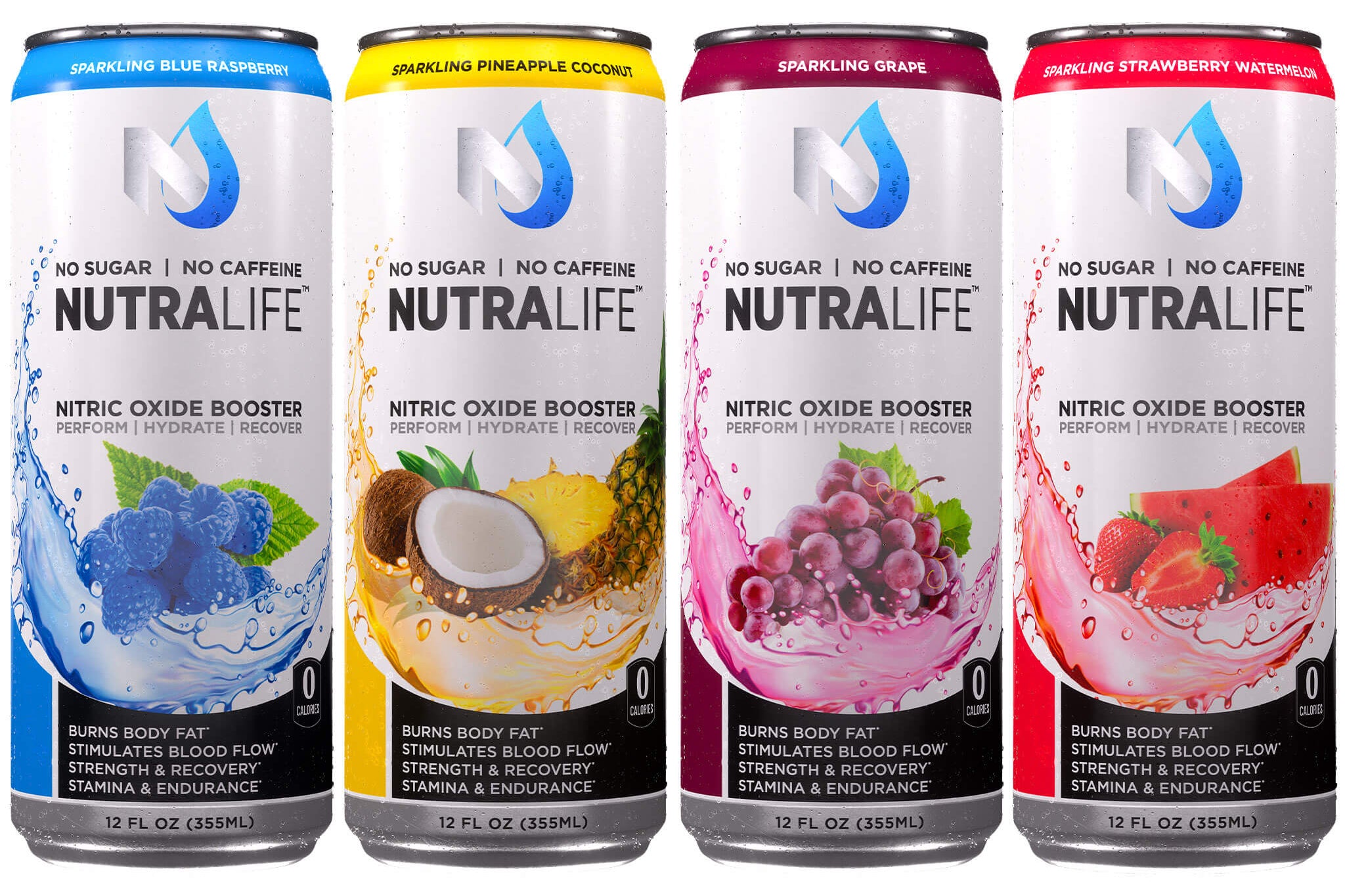
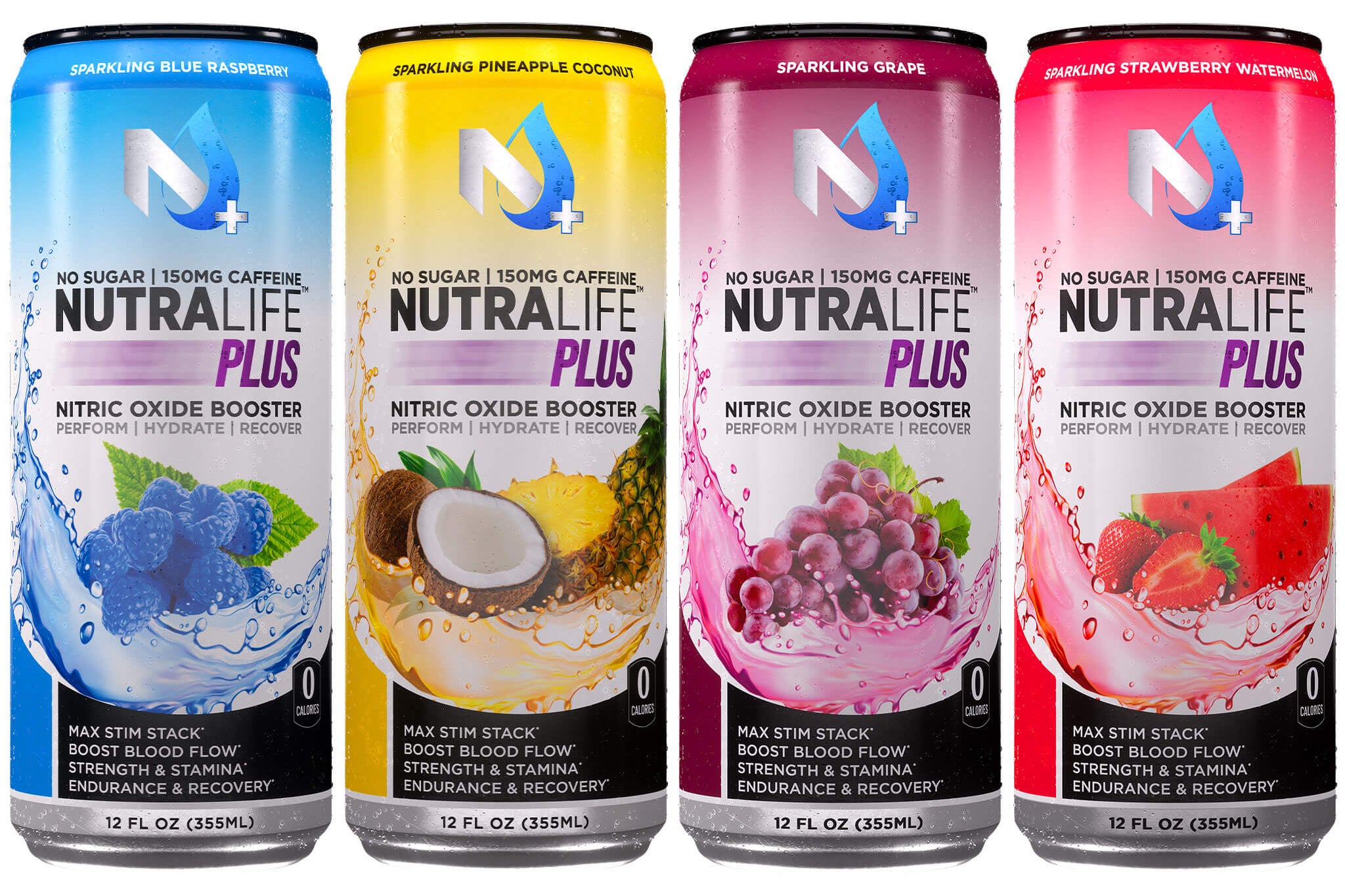
This is the rationale behind the "One Formula. Two Modes" framework that distinguishes NutraLife from single-ingredient RTD approaches. The dual nitric oxide system operates identically in both NutraLife and NutraLife Plus. The stimulant layer in NutraLife Plus — 150mg caffeine and 60mg Dynamine — is the only formula difference between the two products. For the full formula breakdown, see The NutraLife Formula page.
The Clinical Dose Question: Why Both Numbers Matter
Ingredient synergy on a label is only meaningful if both ingredients are present at doses that produce functional effects independently. An underdosed ingredient contributes little regardless of what the other ingredient does alongside it.
The clinical evidence base for Nitrosigine® is built at 1,500mg. The clinical evidence base for L-Citrulline in blood flow research is built at doses of 1,000mg and above. NutraLife includes Nitrosigine® at 1,500mg and L-Citrulline at 1,000mg — the doses from which the published research outcomes are derived — stated by name and number in the fully disclosed formula.
A formula claiming a dual nitric oxide system with one or both ingredients below the studied clinical dose is not operating the system that published research has validated. The label is the verification tool. For a guide to applying this verification framework to any nitric oxide drink label, see Best Nitric Oxide Drinks in 2026: What the Label Should Say. For the full performance framework, see The Complete Guide to Nitric Oxide for Athletes.
KEY TAKEAWAYS
Got Questions
Frequently Asked Questions
Why does NutraLife use both L-Citrulline and Nitrosigine® instead of just one?
Is L-Citrulline or Nitrosigine® more effective for blood flow?
Can I get the same blood flow result from L-Citrulline alone at a higher dose?
REFERENCES
NutraLife ingredient claims are supported by peer-reviewed published research. The following studies were referenced in the development of this page.
2. Rood-Ojalvo S, Sandler D, Veledar E, Komorowski J. The benefits of inositol-stabilized arginine silicate as a workout ingredient. Journal of the International Society of Sports Nutrition. 2015;12(Suppl 1):P14.
3. Komorowski J, Ojalvo SP. A pharmacokinetic evaluation of the duration of effect of inositol-stabilized arginine silicate and inositol alone. FASEB Journal. 2019;33(1_supplement).
4. Schwedhelm E, Maas R, Freese R, et al. Pharmacokinetic and pharmacodynamic properties of oral L-citrulline and L-arginine: impact on nitric oxide metabolism. British Journal of Clinical Pharmacology. 2008;65(1):51-59.
5. Perez-Guisado J, Jakeman PM. Citrulline malate enhances athletic anaerobic performance and relieves muscle soreness. Journal of Strength and Conditioning Research. 2010;24(5):1215-1222.
6. Figueroa A, Wong A, Jaime SJ, Gonzales JU. Influence of L-citrulline and watermelon supplementation on vascular function and exercise performance. Current Opinion in Clinical Nutrition and Metabolic Care. 2017;20(1):92-98.
7. Proctor SD, Kelly SE, Vine DF, et al. Inositol-stabilized arginine silicate demonstrates dose-dependent improvement in endurance exercise performance in competitive male cyclists. FASEB Journal. 2019.
8. Gonzalez AM, Trexler ET. Effects of citrulline supplementation on exercise performance in humans. Journal of Strength and Conditioning Research. 2020;34(5):1480-1495.
9. Moinard C, Nicolis I, Neveux N, et al. Dose-ranging effects of citrulline administration on plasma amino acids and hormonal patterns in healthy subjects. British Journal of Nutrition. 2008;99(4):855-862.
10. Alvares TS, Meirelles CM, Bhambhani YN, et al. L-Arginine as a potential ergogenic aid in healthy subjects. Sports Medicine. 2011;41(3):233-248.
*These statements have not been evaluated by the Food and Drug Administration. This product is not intended to diagnose, treat, cure, or prevent any disease.

