
CATEGORY EDUCATION
What Is an RTD Functional Beverage and Why Does It Matter?
RTD stands for ready to drink. Functional means the formula contains ingredients with documented physiological effects at clinically studied doses. Most beverages on shelves marketed as sports, energy, or wellness drinks do not meet both criteria simultaneously. This article defines the category, establishes the standard, and explains why the distinction matters for athletes choosing a daily performance formula.

An RTD functional beverage is a ready-to-drink product that contains ingredients with documented physiological function at the doses used in published clinical research. RTD means no mixing, no measuring, no preparation. Functional means the formula actually does something beyond providing calories, hydration, or stimulant response — it contains ingredients that address specific physiological mechanisms relevant to athletic performance or health outcomes, at the doses those mechanisms have been studied at. Most beverages marketed with performance or wellness language meet neither standard fully. Some meet one but not the other.
What RTD Means and Why It Matters Beyond Convenience
Ready to drink describes the format, not just the convenience. The functional implication of RTD format is dose precision. A powder supplement delivers approximately the same dose per scoop, with measurement variability of 15-25% depending on settling, technique, and preparation conditions. An RTD delivers the same manufactured dose in every unit with no user-introduced variability. For clinical formula ingredients where the studied dose is a specific number — Nitrosigine® at 1,500mg, L-Citrulline at 1,000mg — the precision of RTD format means the dose is reliably what the label states every single time.
The convenience argument is real but secondary. The primary functional case for RTD format is that it removes the preparation step, which is the failure point for daily supplement compliance. Clinical research measures outcomes of consistent use at stated doses. Real-world outcomes depend on whether the product is actually used consistently at those doses. RTD format produces higher daily compliance than any format requiring preparation steps.
What Functional Means and How to Verify It
Functional is a marketing term with no regulatory definition. A beverage with added vitamins at trace levels is technically functional — those vitamins perform physiological functions. That is not the threshold that matters for athletes. The relevant threshold is: does this formula contain ingredients with documented effects on athletic performance, recovery, or relevant physiology, at the doses used in the published research that produced those documented effects?
This is a label test. For each ingredient in the formula, find the milligram dose on the label and compare it to what the peer-reviewed research for that ingredient was conducted at. If the label dose matches the research dose, the functional claim holds. If the ingredient is present at a fraction of the research dose — either disclosed at a low number or hidden inside a proprietary blend — the functional label is aspirational rather than accurate.
NutraLife passes this test at the ingredient level: Nitrosigine® at 1,500mg (the dose used in blood flow and cognitive performance research), L-Citrulline at 1,000mg (the dose range in nitric oxide production research), KSM-66® at 150mg per serving with 300mg achieved at two daily servings (the dose range in published cortisol reduction research). All doses are stated individually on the label. For the complete formula breakdown, see The NutraLife Formula page.
How RTD Functional Beverages Differ from Sports Drinks and Energy Drinks
Sports drinks are formulated primarily for acute hydration and carbohydrate delivery during exercise. They are not functional in the clinical formula sense — their primary mechanism is fluid replacement and glucose availability, which are physiologically important but not ingredient-specific clinical effects at studied doses. A sports drink provides sodium and glucose at concentrations optimized for absorption rate. It does not carry Nitrosigine® or ashwagandha.
Energy drinks are formulated primarily around caffeine and taurine, often at undisclosed or high caffeine doses, with the goal of acute stimulant response. Some energy drinks include additional ingredients for marketing purposes — B vitamins, amino acid traces, herbal extracts — but these are typically present at doses below what clinical research used and are included for label appeal rather than clinical contribution. An energy drink is not a functional formula for blood flow, recovery, or comprehensive hydration support. It is a stimulant delivery vehicle.
A functional RTD occupies a distinct category from both. It is not an energy drink that also has electrolytes. It is not a sports drink with caffeine added. It is a clinical formula — ingredients at clinical doses, serving a specific performance purpose — in a ready-to-consume format. For the blood flow formula context, see Nitrosigine® ingredient page. For the recovery formula context, see KSM-66® Ashwagandha ingredient page. For the hydration formula context, see Electrolyte Complex ingredient page.
One Formula. Two Modes. The RTD Architecture That Serves the Full Daily Demand
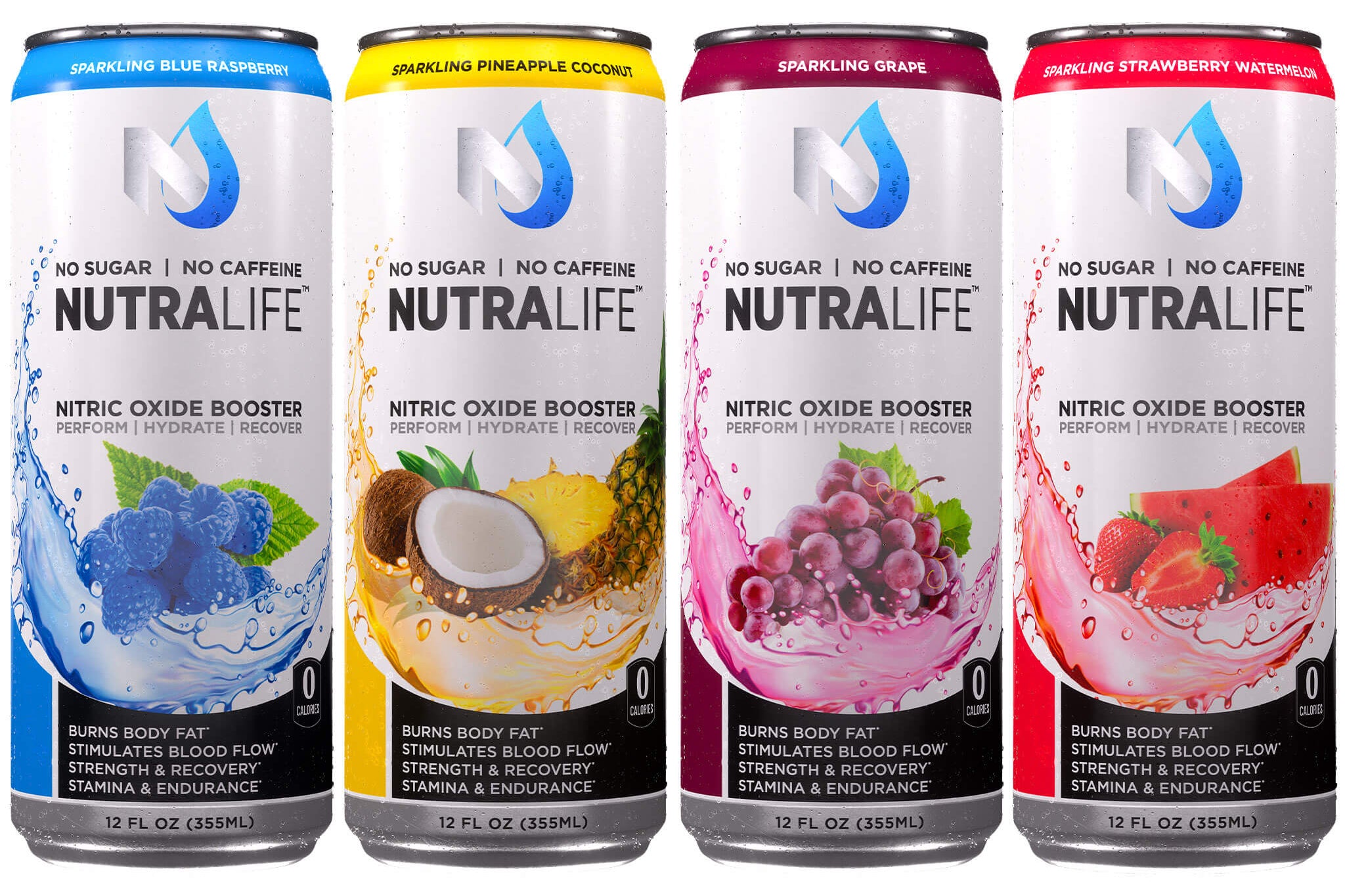
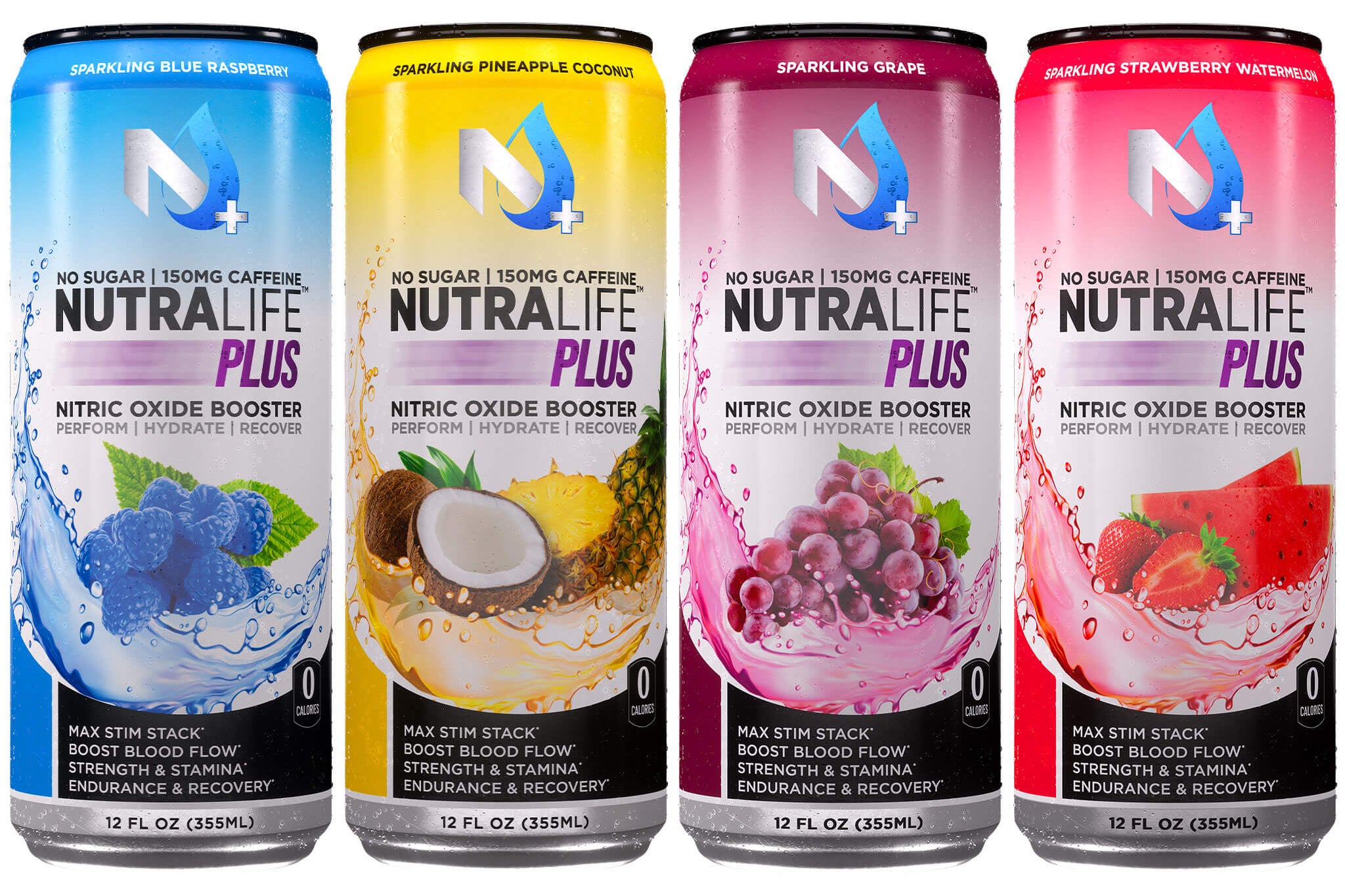
NutraLife and NutraLife Plus share the same core clinical formula. NutraLife is caffeine-free, designed for daily use across all contexts — training days, non-training days, morning, afternoon, evening. NutraLife Plus adds 150mg caffeine and 60mg Dynamine™ for training-day performance activation on top of the same base formula.
This architecture — one clinical formula, available in a caffeinated and caffeine-free version — addresses the full daily need of an athlete who trains at high frequency. The daily blood flow, hydration, and recovery support from the core formula operates continuously. The stimulant layer in NutraLife Plus is applied when training demands it. No separate products are required to cover the full formula stack. This is what distinguishes a functional RTD from a category product: the formula design intention is the daily performance need, not a single acute stimulant moment.
For the complete guide to reading functional beverage labels, see How to choose a functional hydration drink. For the category education on proprietary blends versus fully disclosed formulas, see Proprietary blends vs. clinical doses: what you are actually buying.
KEY TAKEAWAYS
Got Questions
Frequently Asked Questions
What is an RTD functional beverage?
How is a functional RTD different from a sports drink or energy drink?
What should I look for to tell if an RTD is actually functional?
REFERENCES
NutraLife ingredient claims are supported by peer-reviewed published research. The following studies were referenced in the development of this page.
2. Rawson ES, Miles MP, Larson-Meyer DE. Dietary supplements for health, adaptation, and recovery in athletes. International Journal of Sport Nutrition and Exercise Metabolism. 2018;28(2):188-199.
3. Rogers JM, Gills J, Gray M. Acute effects of Nitrosigine and citrulline malate on vasodilation in young adults. Journal of the International Society of Sports Nutrition. 2020;17:12.
4. Rood-Ojalvo S, Sandler D, Veledar E, Komorowski J. The benefits of inositol-stabilized arginine silicate as a workout ingredient. Journal of the International Society of Sports Nutrition. 2015;12(Suppl 1):P14.
5. Chandrasekhar K, Kapoor J, Anishetty S. A prospective, randomized double-blind study on safety and efficacy of a high-concentration full-spectrum extract of ashwagandha root in reducing stress and anxiety in adults. Indian Journal of Psychological Medicine. 2012;34(3):255-262.
6. Sawka MN, Burke LM, Eichner ER, et al. American College of Sports Medicine position stand: exercise and fluid replacement. Medicine and Science in Sports and Exercise. 2007;39(2):377-390.
7. Goldstein ER, Ziegenfuss T, Kalman D, et al. International society of sports nutrition position stand: caffeine and performance. Journal of the International Society of Sports Nutrition. 2010;7(1):5.
8. VanDusseldorp TA, Stratton MT, Bailly AR, et al. Safety of short-term supplementation with methylliberine (Dynamine) alone and in combination with TeaCrine in young adults. Nutrients. 2020;12(3):654.
9. Pérez-Guisado J, Jakeman PM. Citrulline malate enhances athletic anaerobic performance and relieves muscle soreness. Journal of Strength and Conditioning Research. 2010;24(5):1215-1222.
10. Volpe SL. Magnesium and the athlete. Current Sports Medicine Reports. 2015;14(4):279-283.
*These statements have not been evaluated by the Food and Drug Administration. This product is not intended to diagnose, treat, cure, or prevent any disease.

