
CATEGORY EDUCATION
Proprietary Blends vs. Clinical Doses: What You Are Actually Buying
A proprietary blend groups multiple ingredients under a single collective weight, hiding individual amounts from the consumer. A fully disclosed formula states every ingredient by name and dose. This article explains how to identify both on a label, what the difference costs the consumer, and how to verify whether any ingredient is at a dose that matches the published clinical research for that ingredient.

Proprietary blends are legal. They are FDA-compliant. They also make it impossible to know whether any ingredient in a formula is present at the dose the clinical research behind that ingredient was conducted at. That is the entirety of the problem. The regulatory framework allows brands to list ingredients by name without disclosing individual amounts as long as they declare the total weight of the blend. The result is a supplement category where the same prestigious ingredient names appear on labels at doses ranging from clinically relevant to functionally negligible, with no way to tell the difference from the label alone.
How Proprietary Blends Work and Why They Exist
A proprietary blend on a supplement label groups multiple ingredients under a collective name such as "Performance Matrix," "Nitric Oxide Complex," or "Energy Blend," with a single total weight listed. The total weight is the sum of all listed ingredients. Individual ingredient amounts are not disclosed.
The stated rationale for proprietary blends is formula protection: if individual doses are not disclosed, competitors cannot replicate the exact formula. This is a legitimate business concern in a market where formulas can be copied quickly. The unintended consequence is that it also prevents consumers from verifying whether any ingredient is present at a dose consistent with published clinical research, or at a token amount included for label marketing purposes at minimal cost.
The financial incentive to underdose inside a proprietary blend is real. Clinical doses cost more than sub-clinical trace amounts. Nitrosigine® at 1,500mg is a materially more expensive ingredient inclusion than Nitrosigine® at 200mg. Inside a proprietary blend, both appear identically on the label as "Nitrosigine® (Inositol-Stabilized Arginine Silicate)." The consumer pays the same price for the name on the label either way.
What Clinical Dose Means and Why It Matters
A clinical dose is the amount of an ingredient that was used in the published peer-reviewed research that documented the ingredient's functional effects. It is not a minimum threshold defined by a regulatory body. It is the dose the research was built on, the amount that produced the results being cited when a brand claims an ingredient is effective.
When a brand cites published research to support an ingredient in their formula, the implied claim is that their formula contains that ingredient at the dose used in the research. A proprietary blend allows a brand to cite research conducted at 1,500mg Nitrosigine® while potentially using 300mg Nitrosigine® in their formula. That captures the full cost savings of the lower dose and the credibility of the higher-dose research at the same time. The consumer cannot detect this from the label.
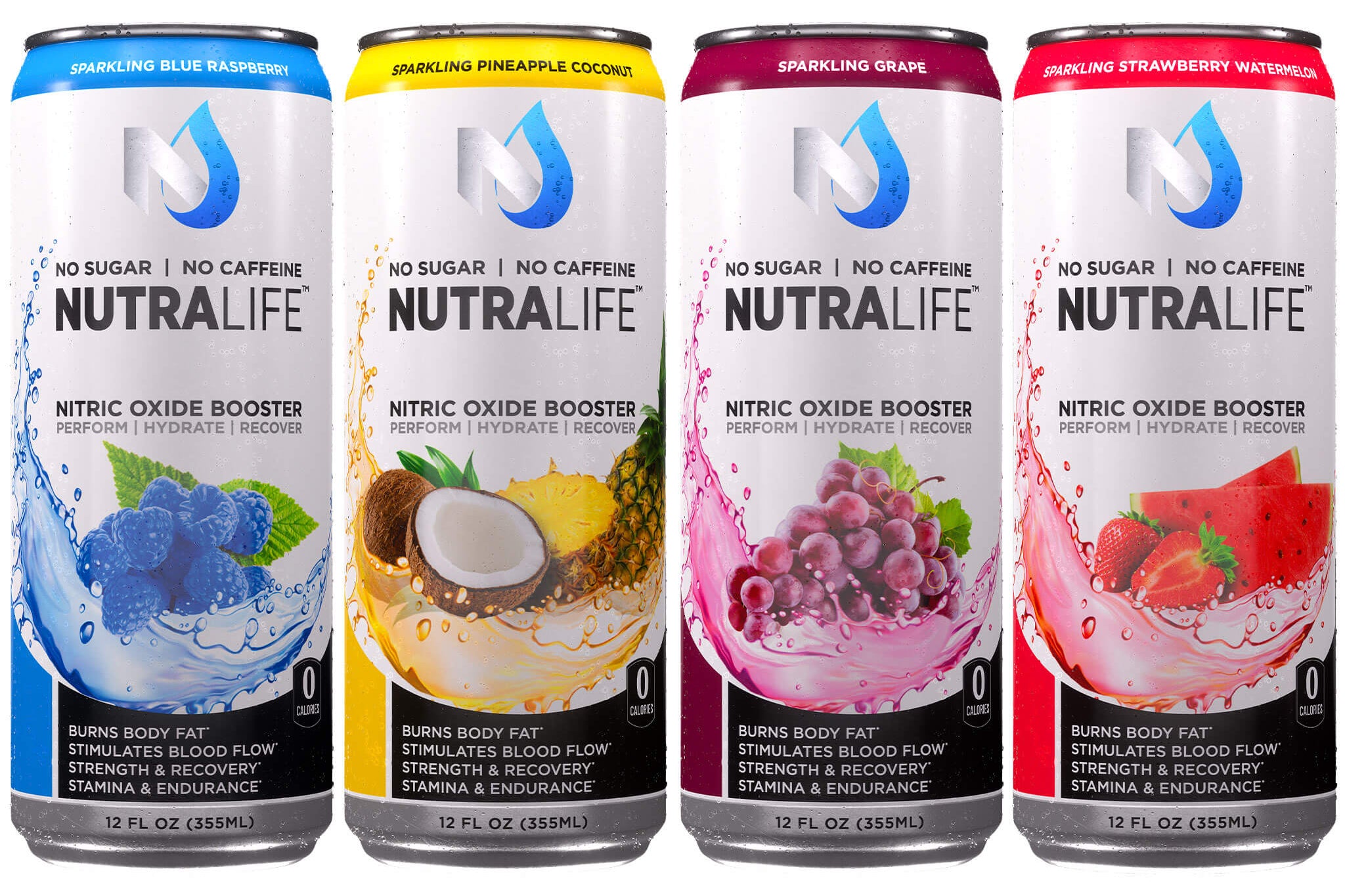
For reference, the clinical doses in published research for NutraLife's key ingredients: Nitrosigine® at 1,500mg, L-Citrulline in the 1,000-3,000mg range for nitric oxide support, KSM-66® Ashwagandha at 300mg daily for the documented cortisol reduction. NutraLife's formula delivers Nitrosigine® at 1,500mg and L-Citrulline at 1,000mg per serving, both stated individually. For details on what those doses produce, see the Nitrosigine® ingredient page and L-Citrulline ingredient page.
How to Read a Label for Dose Transparency
The label test for proprietary blend versus fully disclosed formula takes approximately 30 seconds. Scan the supplement facts panel. If every ingredient in the formula has an individual milligram amount listed next to its name, the formula is fully disclosed. If any group of ingredients shares a single collective weight, the formula contains a proprietary blend for that portion.
Mixed formulas exist. A product may disclose some ingredients individually while grouping others. This is worth noting: the disclosed ingredients can be verified against clinical research, and the proprietary blend portion cannot. The blend portion is where underdosing most commonly occurs, because those are precisely the ingredients the brand chose not to disclose.
One additional check: be aware that some brands list ingredient amounts in micrograms (mcg) rather than milligrams (mg). An ingredient listed at 500mcg is 0.5mg, a fundamentally different scale from 500mg, even though the numbers look similar at a glance. This is not always an attempt to mislead, but it is a detail worth confirming when comparing across products.
What Fully Disclosed Formula Means in Practice
A fully disclosed formula is one where every ingredient has an individual dose stated on the label. There are no collective blend totals. Every ingredient name is paired with its own milligram amount, every time, without exception. This means any consumer can take the formula and compare each ingredient's dose to the published clinical research for that ingredient, independently. No trust required. The formula is verifiable.
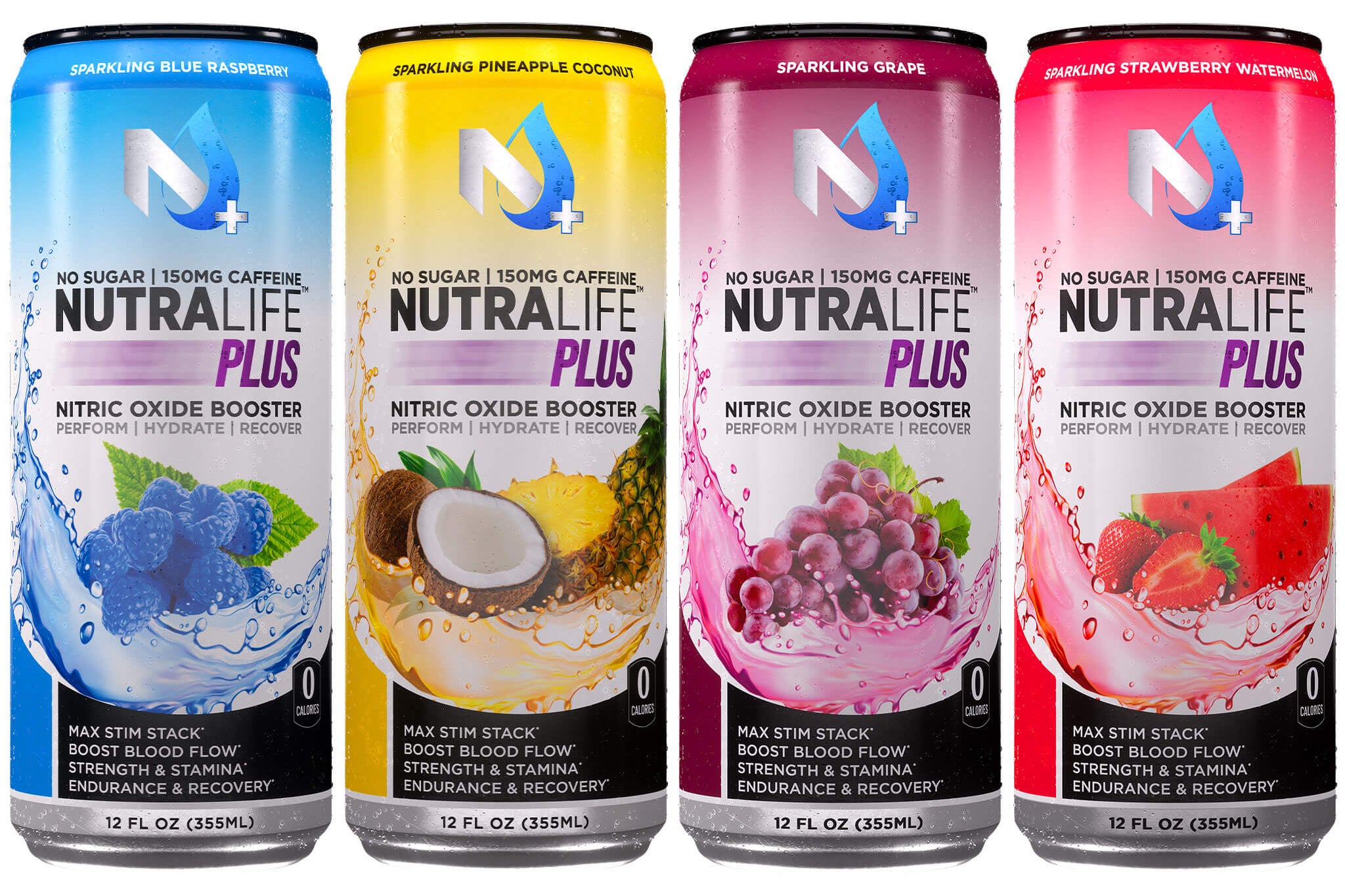
NutraLife's formula is fully disclosed: Nitrosigine® at 1,500mg, L-Citrulline at 1,000mg, KSM-66® Ashwagandha at 150mg, Potassium at 700mg, Magnesium at 120mg, Calcium at 75mg, Sodium at 40mg, Zinc at 10mg, Vitamin C at 70mg. NutraLife Plus includes the above plus 60mg Dynamine® and 150mg caffeine, both stated individually. Every number is on the label. Every number corresponds to the dose in published research. The formula holds up to verification because it was designed to be verified.
For the complete formula breakdown, see The NutraLife Formula. For how to apply this label-reading framework at the point of purchase, see How to read a supplement label and What is an RTD functional beverage and why does it matter.
KEY TAKEAWAYS
Got Questions
Frequently Asked Questions
What is a proprietary blend and why do supplement brands use them?
How do I know if an ingredient is at a clinical dose?
Is a more expensive supplement formula always better than a cheaper one?
REFERENCES
NutraLife ingredient claims are supported by peer-reviewed published research. The following studies were referenced in the development of this page.
2. Rawson ES, Miles MP, Larson-Meyer DE. Dietary supplements for health, adaptation, and recovery in athletes. International Journal of Sport Nutrition and Exercise Metabolism. 2018;28(2):188-199.
3. Rogers JM, Gills J, Gray M. Acute effects of Nitrosigine and citrulline malate on vasodilation in young adults. Journal of the International Society of Sports Nutrition. 2020;17:12.
4. Rood-Ojalvo S, Sandler D, Veledar E, Komorowski J. The benefits of inositol-stabilized arginine silicate as a workout ingredient. Journal of the International Society of Sports Nutrition. 2015;12(Suppl 1):P14.
5. Pérez-Guisado J, Jakeman PM. Citrulline malate enhances athletic anaerobic performance and relieves muscle soreness. Journal of Strength and Conditioning Research. 2010;24(5):1215-1222.
6. Chandrasekhar K, Kapoor J, Anishetty S. A prospective, randomized double-blind study on safety and efficacy of a high-concentration full-spectrum extract of ashwagandha root in reducing stress and anxiety in adults. Indian Journal of Psychological Medicine. 2012;34(3):255-262.
7. Auddy B, Hazra J, Mitra A, et al. A standardized Withania somnifera extract significantly reduces stress-related parameters in chronically stressed humans. Journal of the American Nutraceutical Association. 2008;11(1):50-56.
8. Goldstein ER, Ziegenfuss T, Kalman D, et al. International society of sports nutrition position stand: caffeine and performance. Journal of the International Society of Sports Nutrition. 2010;7(1):5.
9. Li Z, Percival SS, Bonard S, Agarwal A. Fabrication of nanoparticle-containing emulsions by homogenization. Food Science and Technology International. 2007. (Bioavailability context for RTD delivery formats)
10. Volpe SL. Magnesium and the athlete. Current Sports Medicine Reports. 2015;14(4):279-283.
*These statements have not been evaluated by the Food and Drug Administration. This product is not intended to diagnose, treat, cure, or prevent any disease.

